
What Is Hardscaping? A Complete Homeowner's Guide
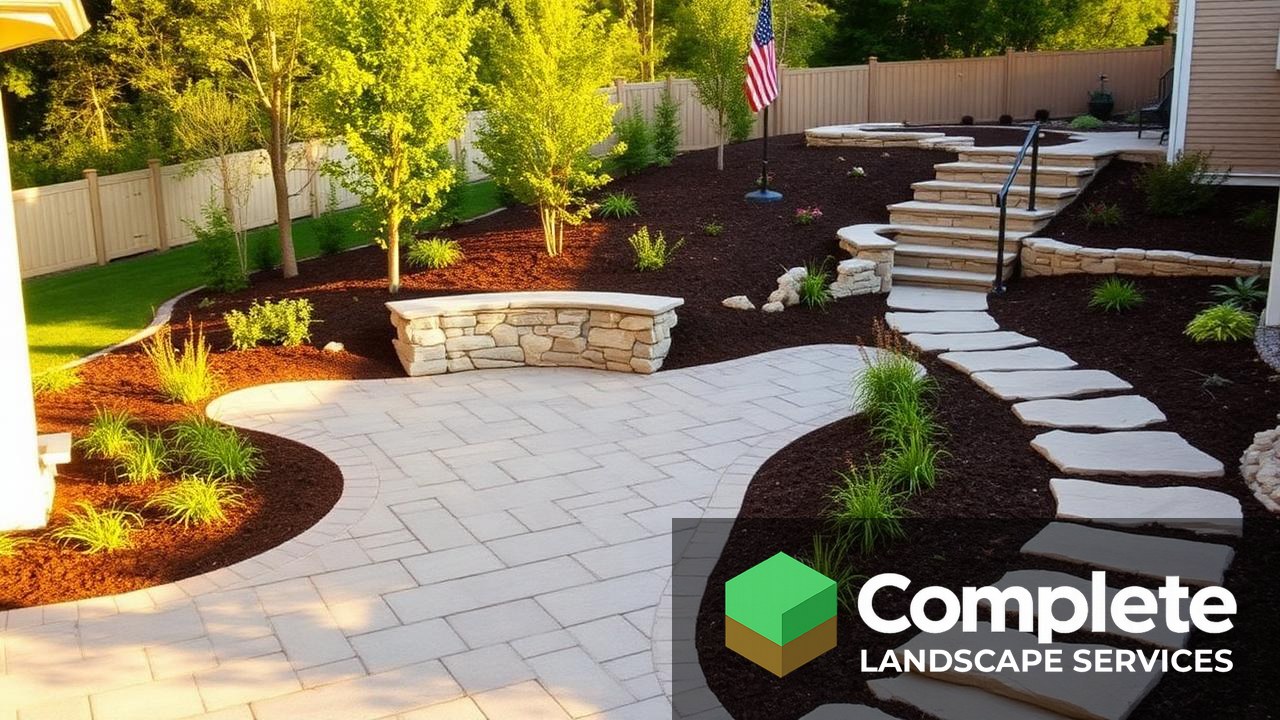
Table of Contents
Hardscaping is the non-living, built portion of a landscape: patios, walkways, driveways, retaining walls, steps, edging, fire pits, and outdoor kitchens. If you cannot water it, it is hardscape. The living half of the same yard, meaning lawn, trees, shrubs, and beds, is called softscape. Understanding what hardscaping is matters because these elements do the structural work in a yard. They set the circulation, hold back slopes, control where stormwater goes, and create the usable outdoor rooms that make a property feel finished. Hardscape is also the most expensive and most permanent thing you will install outdoors, so the sequencing, drainage, and base preparation deserve far more attention than the surface material most homeowners fixate on.
What is hardscaping in landscaping?
Hardscaping is every non-living, permanent element of a landscape design. That includes patios, walkways, driveways, retaining walls, steps, decks, pergolas, fire pits, water features, and edging. Hardscape provides structure, circulation, and drainage control, while softscape (lawn, trees, shrubs, and beds) provides the living layer around it.
The distinction is not just vocabulary. Hardscape and softscape behave differently over time. A shrub can be moved in an afternoon and a lawn can be reseeded in a season, but a poured concrete patio installed over an unstable base is a demolition job, not an adjustment. That permanence is why professional designs almost always resolve grading, drainage, and hardscape layout before a single plant is specified.
A useful way to think about it: hardscape defines the rooms, softscape furnishes them. A patio and a low seating wall create an outdoor living room; the planting bed behind it softens the edges and gives the space a season-to-season personality.
What are the most common hardscaping materials?
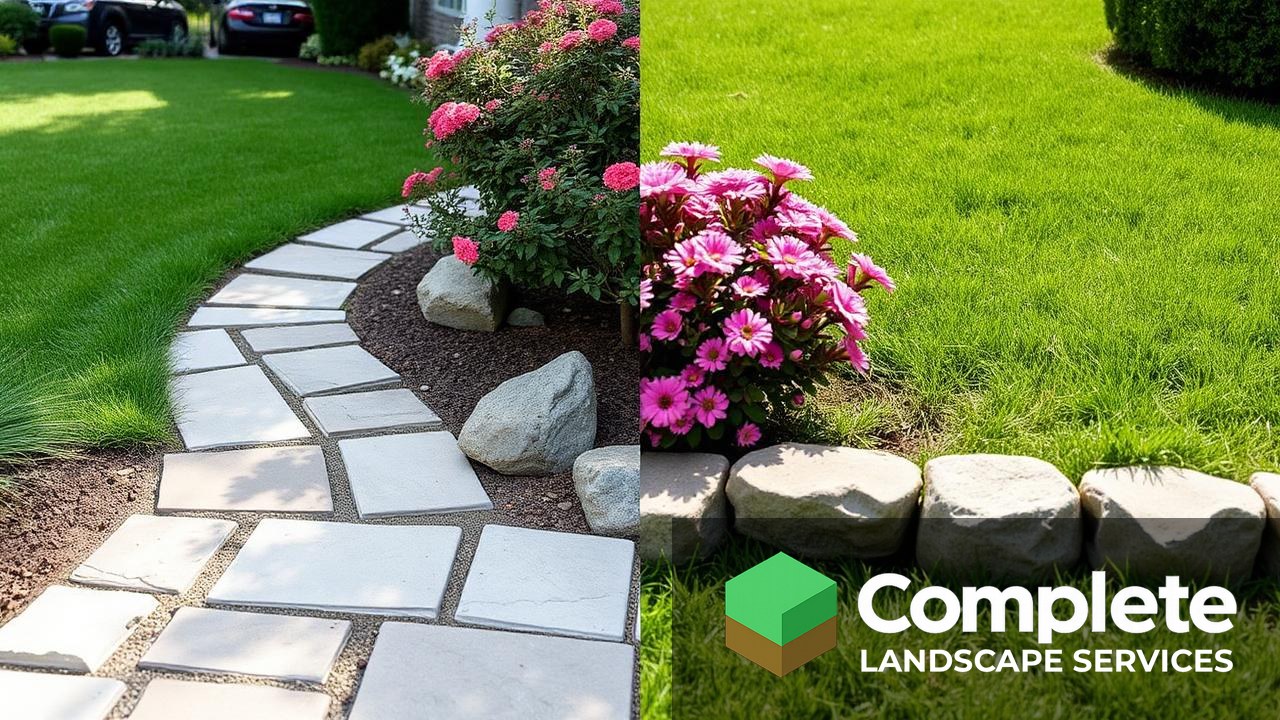
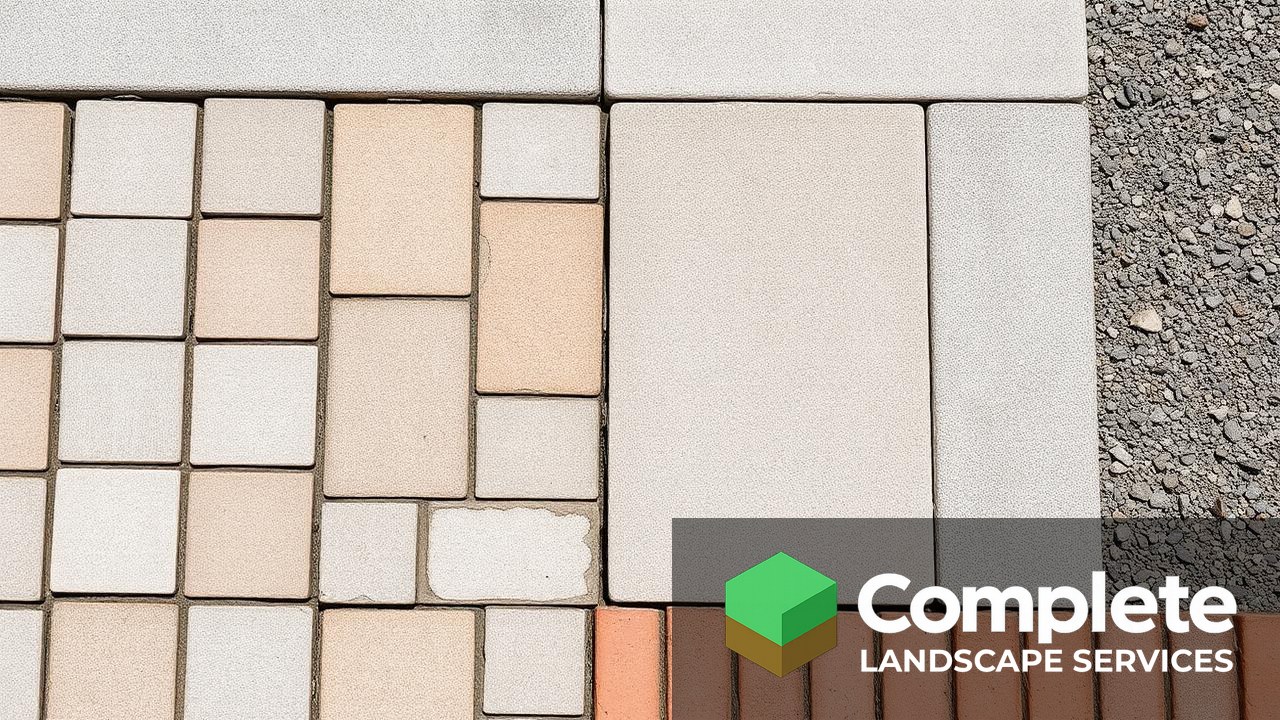
The four most common hardscaping materials are concrete pavers, poured concrete, natural stone, and brick, with gravel used for informal paths and drainage. Pavers dominate residential patios because they flex with frost movement, can be lifted and reset individually, and come in a wide range of colors and formats.
Poured concrete is the cheapest per square foot and the fastest to install, but it cracks along stress lines in freeze-thaw climates and is difficult to repair invisibly. Natural stone, such as bluestone, flagstone, and granite, is the premium choice and ages beautifully, but the material cost and the labor to fit irregular pieces can double a project budget.
Brick sits in the middle: durable, classic, and easy to source, though the color palette is narrow and older reclaimed brick can spall in wet-freeze regions. Gravel is the budget-friendly option for side yards, utility paths, and drainage zones, and it doubles as a permeable surface where stormwater regulations apply.
Whatever you choose, the surface is the least important part of the assembly. Two identical paver patios can perform completely differently depending on the depth and compaction of the aggregate base underneath.
| Material | Typical installed cost (per sq ft) | Lifespan | Best for |
|---|---|---|---|
| Poured concrete | $8 to $15 | 20 to 30 years | Driveways, large simple slabs, tight budgets |
| Concrete pavers | $15 to $30 | 30 to 50 years | Patios and walkways in freeze-thaw climates |
| Natural stone | $25 to $50 | 50+ years | Premium patios, steps, feature walkways |
| Brick | $15 to $28 | 40+ years | Traditional homes, formal walkways, edging |
| Gravel | $3 to $8 | 5 to 10 years (top-ups) | Side yards, informal paths, permeable zones |
Why is drainage the most important part of hardscaping?
Every hardscape surface is impermeable, so it redirects water somewhere else. Without deliberate slope, base drainage, and an outlet, that water pools against foundations, undermines patio bases, and blows out retaining walls. Drainage design is the single biggest predictor of whether hardscape lasts five years or fifty.
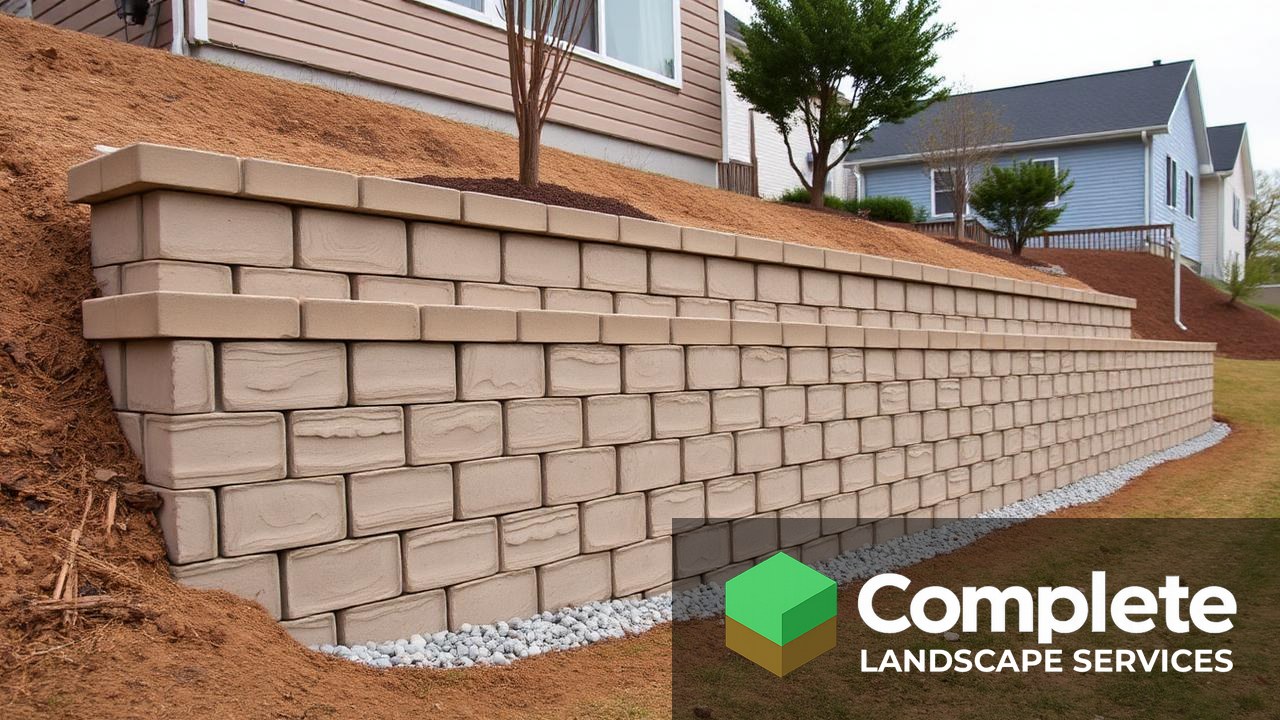
A properly built patio slopes away from the house at roughly a quarter inch per foot, sits on 4 to 12 inches of compacted crushed aggregate, and is separated from the subsoil by a geotextile fabric so fines cannot migrate up into the base. Retaining walls need a drainage aggregate zone and a perforated drain pipe behind them, because saturated soil exerts several times the lateral pressure of dry soil.
If your yard already struggles with standing water, resolve that before you build. Our guide on how to fix lawn drainage problems walks through grading, French drains, and dry wells, and it is worth reading first if you have ever seen puddles sit for more than an hour after rain.
What hardscaping adds the most value to a home?
Patios, front walkways, and functional retaining walls deliver the strongest return. A well-designed paver patio typically recovers a majority of its cost at resale and, more importantly, expands the usable living area of the property. Purely decorative features return far less than structural improvements that solve a real problem.
Front-of-house hardscape carries outsized weight because it is the first thing a buyer sees. Replacing a cracked concrete path with a wide, well-lit paver walkway changes the perceived condition of the entire house for a fraction of what a kitchen refresh costs.
In the back yard, the value comes from usability. A 300 square foot patio that comfortably seats eight people is worth more than 600 square feet of awkward, unshaded slab. Size the space around real furniture, then add the structure that makes it usable after dark and after summer.
Retaining walls are the exception to the decorative-versus-functional rule. On a sloped lot they can reclaim genuinely unusable ground. If you are working with grade change, our roundup of retaining wall ideas covers material choices, tiering, and the height at which engineering becomes mandatory.
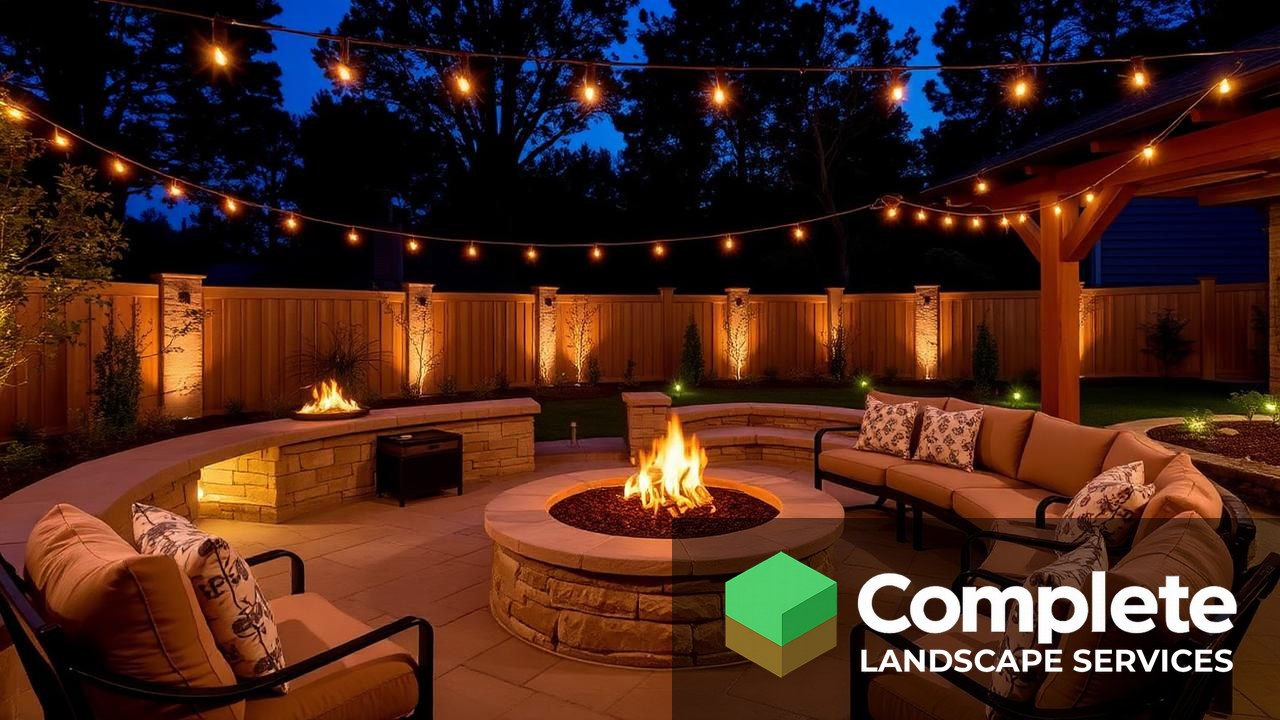
How much does hardscaping cost?
Most residential hardscaping projects land between $15 and $30 per square foot installed, with simple concrete at the low end and cut natural stone at the high end. A typical 300 square foot paver patio runs roughly $4,500 to $9,000, and retaining walls are usually quoted per square foot of wall face rather than footprint.
Excavation depth drives cost more than material choice. A patio on flat, well-drained soil needs a shallower base than one on heavy clay in a frost region, and access matters too: if a machine cannot reach the work area, every cubic yard of spoil leaves by wheelbarrow and labor hours climb quickly.
Budget separately for the things that are easy to forget in a first quote: edge restraint, polymeric joint sand, permits where required, disposal of excavated material, and low-voltage lighting conduit run before the surface goes down. Adding lighting later means cutting into finished work.
Should you DIY hardscaping or hire a professional?
Small, flat, low-consequence projects such as gravel paths, stepping stones, and patios under about 120 square feet are realistic DIY jobs. Anything involving grade change, retaining walls over three feet, structural drainage, or a surface tied to the house should go to a licensed contractor.
The reason is not skill, it is failure cost. A misaligned stepping stone is a five minute fix. A retaining wall that leans after its second winter is a full teardown, and in many jurisdictions walls above a set height require an engineered design and a permit regardless of who builds them.
If you want to attempt your own patio, start with the process rather than the shopping list. Our step-by-step guide on how to install a patio covers layout, excavation depth, base compaction, screeding, and jointing in the order a professional crew actually works.
Frequently Asked Questions
The bottom line
Hardscaping is the structural half of your landscape, and it is the half that decides whether the rest of the yard works. Get the grading, base, and drainage right and the surface material becomes a matter of taste and budget rather than a source of future repairs. Start with the problems your property actually has, slope, standing water, awkward circulation, and let the design solve those first. Plan lighting alongside the build using our outdoor lighting ideas.
Thinking bigger picture? Read our full guide on How to Start a Landscaping Company, or visit our member directory to connect with vetted Complete Landscape Services professionals.
Need professional help?
Browse our member directory to find trusted Complete Landscape Services professionals for hardscaping and more.
Our Member Directory