
How to Install a Patio: A Step-by-Step Guide for Homeowners
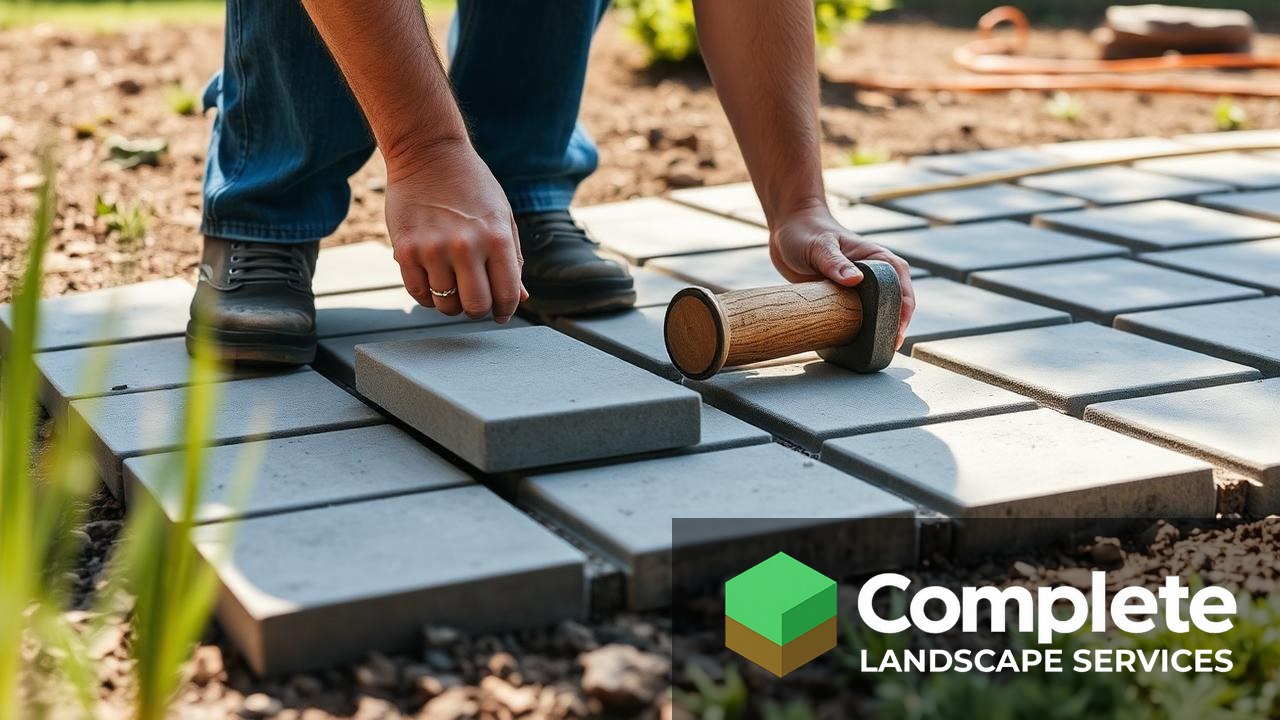
Table of Contents
Learning how to install a patio is mostly learning how to build a base. The pavers people shop for are the last two hours of a multi-day job, and almost every failed patio, the sunken corner, the wobbling stone, the weed-choked joints, traces back to something that happened below the surface. This guide walks through the sequence a professional crew follows: marking the layout and setting the slope, excavating to the right depth for your soil and climate, installing and compacting crushed aggregate in lifts, screeding a precise bedding layer, laying and cutting the field, and locking everything in with edge restraint and jointing sand. Follow it in order and a 300 square foot patio is a realistic project for two people across a few weekends.
How do you plan and lay out a patio?
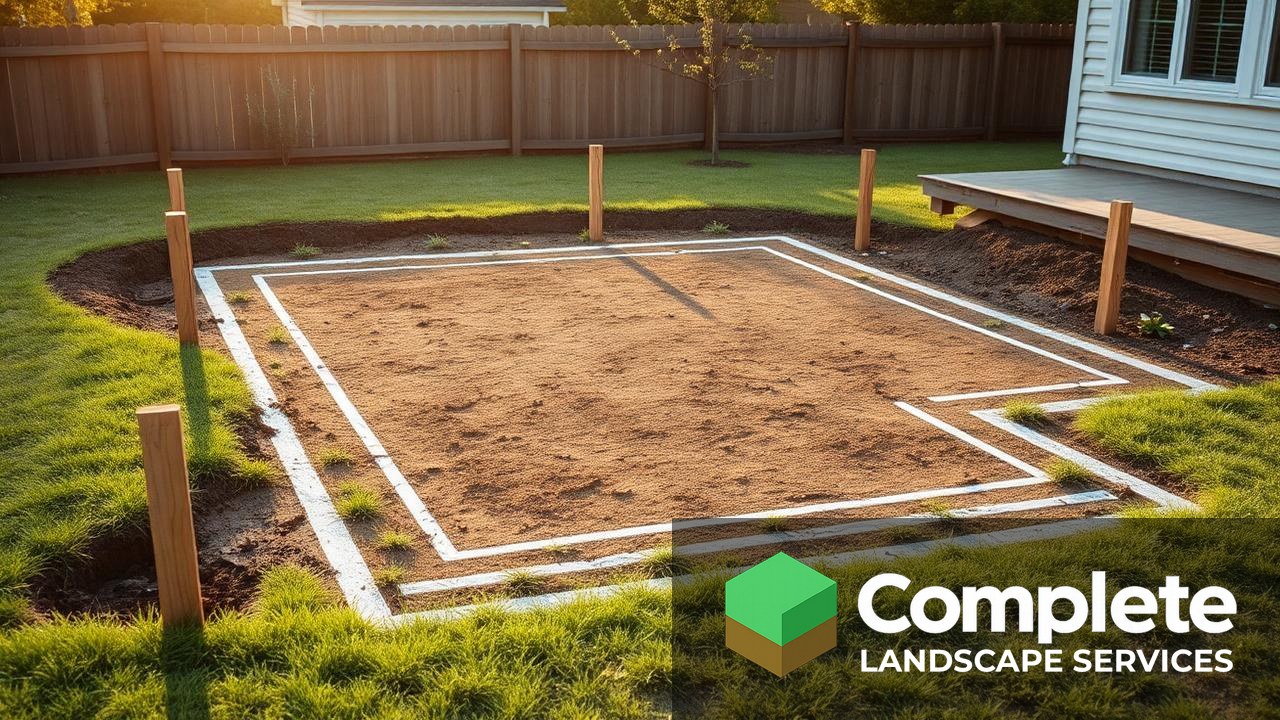
Start by sizing the patio around the furniture it will hold, allowing 36 inches of clearance behind seated chairs. Mark the perimeter with stakes and mason line, set the line height at the finished paver elevation, and build in a slope of a quarter inch per foot running away from the house.
Call your utility locate service before you break ground. In the USA that is 811 and in most of Canada it is Click Before You Dig; both are free and both take a few business days, so make the call the week before you plan to start.
For sizing, work backward from use. A four-person bistro setup needs about 10 by 10 feet. A six to eight person dining table with chairs that pull out needs closer to 14 by 16 feet. Add a couple of feet on any side that will hold a grill or a planter run.
Set your string lines at the finished surface height, not at the excavation depth. Every measurement afterward, excavation, base thickness, bedding sand, is taken down from that line, which keeps the slope consistent across the whole field.
How deep should you excavate for a patio?
Excavate 7 to 9 inches below the finished surface for a patio on well-drained soil in a mild climate, and 10 to 12 inches for heavy clay or a freeze-thaw region. That depth accommodates 4 to 8 inches of compacted aggregate base, 1 inch of bedding sand, and the paver thickness, which is usually 2 3/8 inches.
Excavate at least 6 inches wider than the finished patio on every side. The base has to extend past the pavers to support the edge restraint, and a base that stops at the paver line will let the perimeter drift outward over a few seasons.
Keep the excavated subgrade following the same slope as the finished surface so the base layer stays a uniform thickness. A base that is 4 inches thick in one corner and 9 inches in another will settle unevenly no matter how well you compact it.
Lay a woven geotextile fabric across the subgrade before adding aggregate. It costs very little and it stops soil fines from pumping up into the base, which is the most common cause of long-term settling on clay lots.
How do you build and compact the patio base?
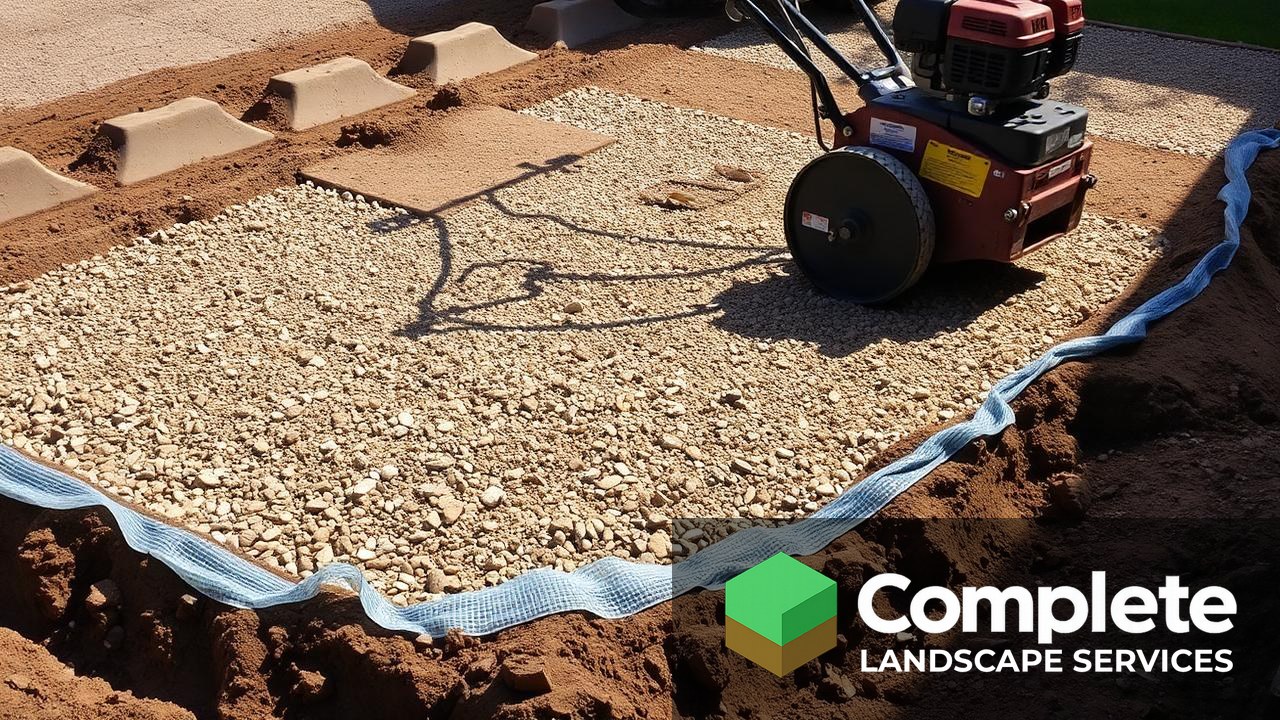
Add crushed aggregate in lifts of no more than 4 inches and compact each lift with a plate compactor before adding the next. Lightly mist dry material so it binds. A properly compacted base sounds solid underfoot and shows no boot prints when you walk across it.
Use a well-graded crushed stone with fines, sold as 3/4 inch minus, Class 5, crusher run, or Granular A depending on your region. Round pea gravel and clean stone do not lock together and will never compact into a stable platform.
Rent a plate compactor rather than trying to tamp by hand. For a 300 square foot patio, a single day rental is enough and it is the single highest-value tool in the project. Make several passes in perpendicular directions per lift.
Check the slope with a long level and a torpedo level as you go. Correcting a quarter inch at base stage is trivial. Correcting it after the pavers are down means pulling the field back up.
How do you screed the bedding sand layer?
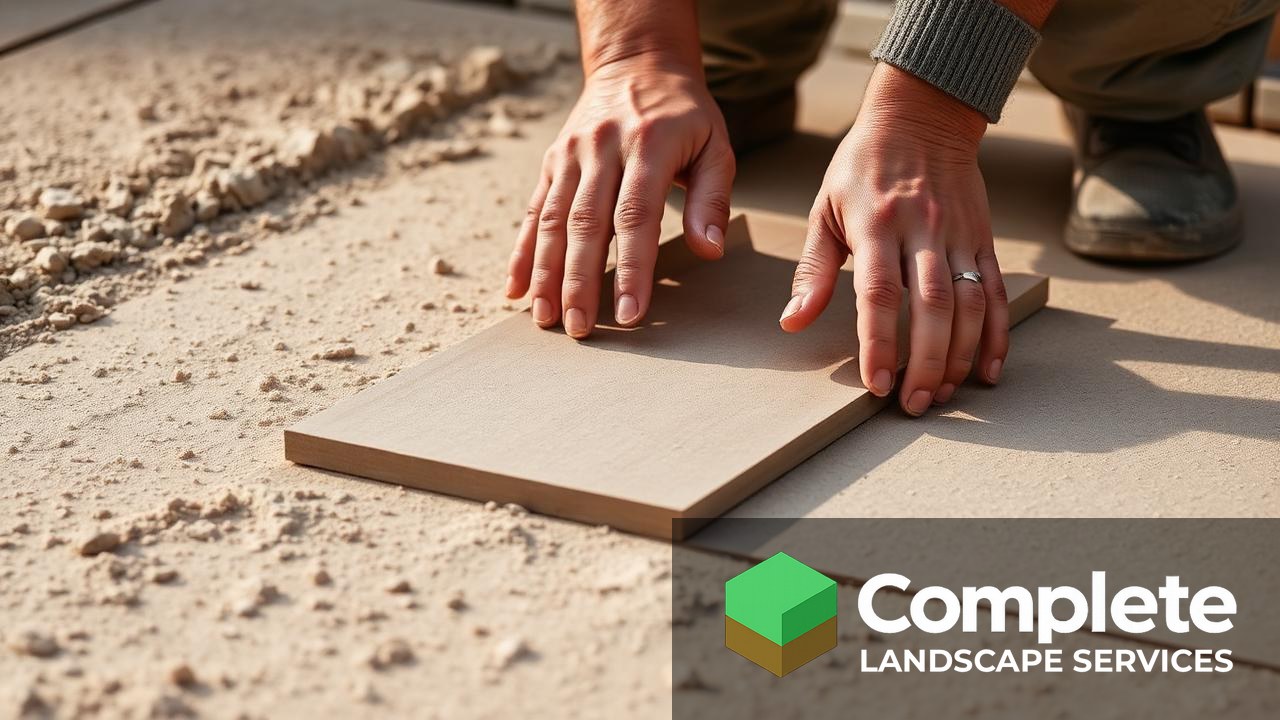
Lay two parallel screed rails, usually 1 inch outside diameter conduit, on the compacted base, spread coarse bedding sand over them, then pull a straight board across the rails to strike off a uniform 1 inch layer. Remove the rails, fill the voids, and do not walk on the screeded sand.
The bedding layer is exactly 1 inch thick, not more. A thicker sand layer feels forgiving while you lay pavers, but it compresses unevenly under load and produces the classic dished patio a year later.
Use coarse concrete sand or the manufacturer-specified bedding sand. Fine mason sand and play sand hold too much water and migrate under traffic.
Work in sections you can cover with pavers the same day. Rain on an uncovered screeded bed means starting the bedding layer again.
How do you lay and cut the pavers?
Start in a fixed 90 degree corner, ideally against the house, and work outward across the field, setting each paver straight down rather than sliding it into place. Keep string lines every few courses to check alignment, and save all cutting for the perimeter once the full field is laid.
Pull pavers from three or four pallets at once. Color varies slightly between production runs, and mixing as you go prevents visible blocks of a single shade across the finished surface.
Maintain consistent joint spacing. Most modern pavers have integral spacer nibs that set the gap for you; if yours do not, a consistent 1/8 inch gap is standard and gives the jointing sand something to grip.
Cut with a masonry blade on an angle grinder for a handful of pieces, or rent a wet saw if the perimeter has curves. Wear eye and hearing protection and cut outdoors: silica dust from concrete pavers is a genuine health hazard, and wet cutting suppresses most of it.
How do you finish a patio with edge restraint and jointing sand?
Install a rigid plastic or aluminum edge restraint around the entire perimeter, spiked into the compacted base every 10 to 12 inches. Then sweep polymeric jointing sand into the joints, compact the field with a plate compactor on a protective pad, top up the sand, and activate it with a light misting.
Edge restraint is not optional. Without it, the outer courses creep outward under foot traffic and freeze-thaw cycling until the joints open and the field loses its interlock. This is the most commonly skipped step on DIY patios and the most common reason they look tired after three years.
Polymeric sand costs more than plain joint sand and is worth it: it resists weed germination, insect tunneling, and washout. Follow the manufacturer's watering instructions precisely, because over-watering causes haze on the paver surface and under-watering leaves the sand loose.
Give the patio a full day before heavy use. Once it is set, an annual sweep, an occasional rinse, and a joint sand top-up every few years are the entire maintenance program.
What does a patio cost to install?
A DIY 300 square foot paver patio runs roughly $1,800 to $3,500 in materials plus $150 to $300 in tool rental. The same patio installed professionally is typically $4,500 to $9,000, with the difference being labor, excavation equipment, disposal, and a workmanship warranty.
Pavers themselves are usually 35 to 45 percent of a DIY material budget. Aggregate, sand, fabric, and edge restraint make up the rest, and homeowners routinely underestimate the aggregate: a 300 square foot patio with a 6 inch base needs roughly 6 tons of crushed stone.
If you are getting professional quotes and want to understand how the number is built, it helps to see the estimating side. Our breakdown of how to price landscaping jobs explains the crew-hour, material, and overhead math behind a contractor's figure so you can compare bids on substance rather than the bottom line.
| Item | Quantity | Typical cost |
|---|---|---|
| Concrete pavers | 300 sq ft plus 7% cutting waste | $900 to $1,800 |
| Crushed aggregate base (6 in) | About 6 tons | $300 to $600 |
| Coarse bedding sand (1 in) | About 1 ton | $60 to $120 |
| Geotextile fabric | 350 sq ft | $50 to $110 |
| Edge restraint and spikes | About 75 linear ft | $120 to $250 |
| Polymeric jointing sand | 3 to 4 bags | $90 to $180 |
Frequently Asked Questions
The bottom line
A patio is a base project with a decorative surface on top. Excavate deeper than feels necessary, compact in thin lifts, hold the slope, keep the bedding sand at exactly one inch, and never skip the edge restraint. Do those five things and the patio will outlast the furniture you put on it. Run lighting sleeves during the build, as explained in our outdoor lighting ideas.
Thinking bigger picture? Read our full guide on How to Start a Landscaping Company, or visit our member directory to connect with vetted Complete Landscape Services professionals.
Need professional help?
Browse our member directory to find trusted Complete Landscape Services professionals for hardscaping and more.
Our Member Directory