
How to Fix Lawn Drainage Problems: Causes, Solutions, and Costs
Table of Contents
Fixing lawn drainage problems starts with identifying which of three things is actually wrong. The ground may slope the wrong way, sending water toward the house or into a low spot with no outlet. The soil may be compacted or heavy in clay, so water arrives faster than it can infiltrate. Or the yard may simply be receiving more water than it can handle, usually because roof runoff from hundreds of square feet of shingle is being dumped at one point beside the foundation. Each cause has a different fix, and applying the wrong one is why so many homeowners install a drain that never solves the puddle. This guide covers diagnosis first, then the specific solutions, costs, and when the job is beyond a weekend.
What causes standing water in a yard?
The three root causes are grade, soil, and volume. Grade problems send water toward low points or the foundation. Soil problems, meaning compaction or high clay content, stop water infiltrating. Volume problems occur when roof and driveway runoff concentrates in one area faster than the ground can absorb it.
Most problem yards have two of the three at once. A new-build lot is a classic example: heavy equipment compacts the subsoil during construction, thin topsoil is spread over it, and downspouts discharge directly at the foundation. Any single fix helps a little; all three together solve it.
Start by watching the yard during an actual rainfall. Note where water enters, the path it takes, and where it stops. Ten minutes of observation in a storm tells you more than an hour of measuring on a dry day.
Note also how long water stands. Puddles that clear within an hour are normal on most soils. Water that sits for six hours or more indicates a genuine infiltration or outlet problem worth spending money on.
How do you test your soil drainage?
Dig a hole 12 inches deep and 6 inches wide, fill it with water and let it drain completely, then fill it again and time the drop. Well-draining soil falls 1 to 3 inches per hour. Under 1 inch per hour indicates a serious infiltration problem, usually clay or compaction.
This percolation test is the same one used for septic design and it is genuinely diagnostic. Run it in two or three locations, including a problem area and a spot that drains normally, so you have a comparison within your own yard.
Pair it with the screwdriver test for compaction: a 6 inch screwdriver should push into moist soil with light hand pressure. If you have to lean on it, the soil is compacted and core aeration will improve infiltration meaningfully.
If percolation is slow but the soil is not compacted, you likely have clay. Clay cannot be fixed by adding sand, which makes it worse. It improves only through repeated additions of organic matter over several seasons, or by routing water around it rather than through it.
How do you fix a yard that slopes toward the house?
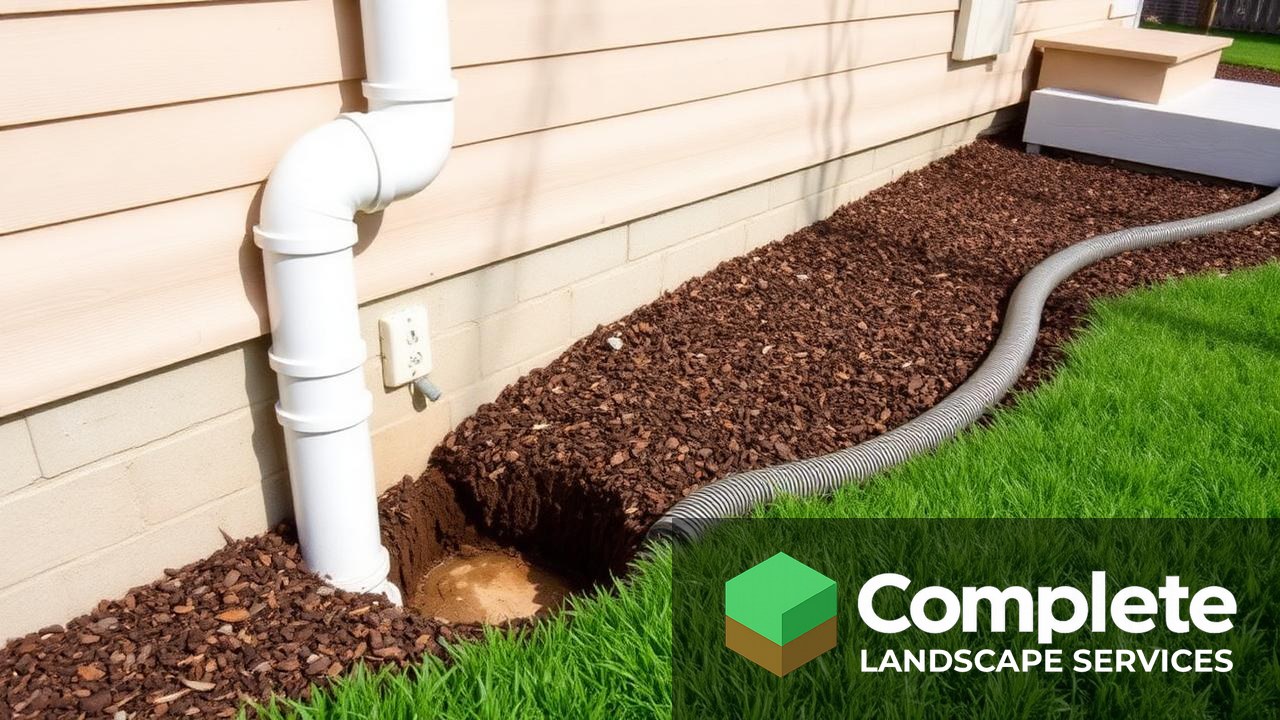
Regrade so the ground falls at least 6 inches over the first 10 feet away from the foundation, which is about a 5 percent slope. Add screened topsoil against the foundation, feather it out into the lawn, compact lightly, and reseed or resod. Extend downspouts at least 6 feet past the new grade.
Negative grade at the foundation is both the most common drainage defect and the most consequential, because the eventual damage is structural rather than cosmetic. It is also frequently the cheapest to fix.
Keep the finished soil at least 6 inches below siding or any wood element to avoid moisture and pest issues. If you cannot achieve the slope without burying siding, the fix becomes a swale or a drain rather than fill.
Downspout extensions do a remarkable amount of work for very little money. A single downspout on a 1,000 square foot roof section discharges roughly 600 gallons in a one inch rain event. Moving that discharge 6 to 10 feet away, or piping it underground to a pop-up emitter, often eliminates a foundation puddle entirely.
When do you need a French drain?
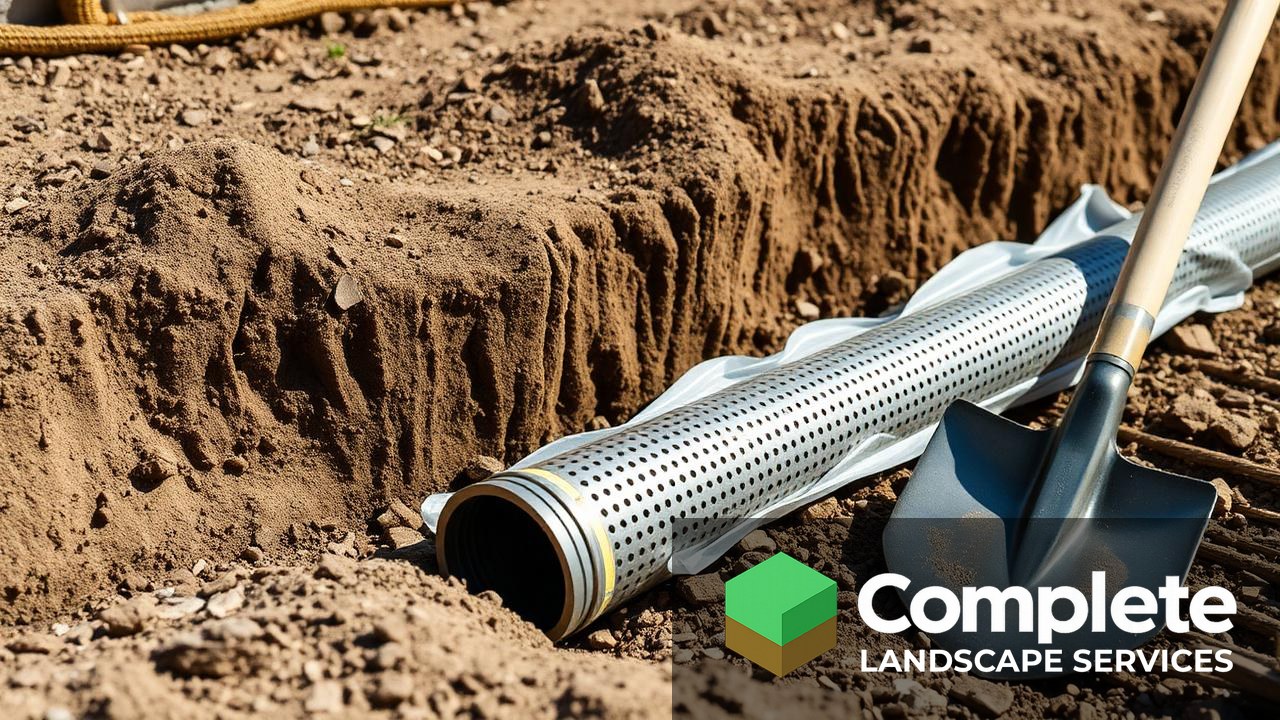
Install a French drain when water consistently collects in an area that has somewhere lower to drain to. It is a gravel-filled trench with a perforated pipe wrapped in filter fabric, sloped at least 1 percent toward a daylight outlet, dry well, or storm connection. Without a legitimate outlet, a French drain just relocates the puddle.
A typical residential French drain is 12 to 24 inches deep and 6 to 12 inches wide, with 4 inch perforated pipe laid holes-down on a bed of clean washed stone, backfilled with more stone, and wrapped entirely in non-woven geotextile so soil fines cannot clog it.
The outlet is the part that gets skipped and the reason many DIY drains fail within two years. The pipe must exit somewhere: a lower point in the yard where it can daylight, a dry well sized for the volume, or a permitted municipal connection. Check local rules before discharging onto a neighbouring property, which is prohibited in many jurisdictions.
Expect $15 to $35 per linear foot for professional installation, so a 60 foot run typically lands between $900 and $2,100. DIY material cost is roughly $8 to $14 per foot plus a very long day with a trenching shovel or a rented trencher.
What are the alternatives to a French drain?
Dry wells store and slowly release water where there is no downhill outlet. Rain gardens capture and infiltrate runoff using deep-rooted native plants. Swales move water across a property as a shallow vegetated channel. Core aeration plus compost topdressing improves infiltration on compacted soil without any excavation.
Dry wells suit sites that are flat or that sit at the low point of the neighbourhood. A dry well is a buried chamber or gravel pit that holds surge volume and lets it percolate over hours. Size it to your roof area and local rainfall intensity; an undersized dry well simply overflows in the storms that matter.
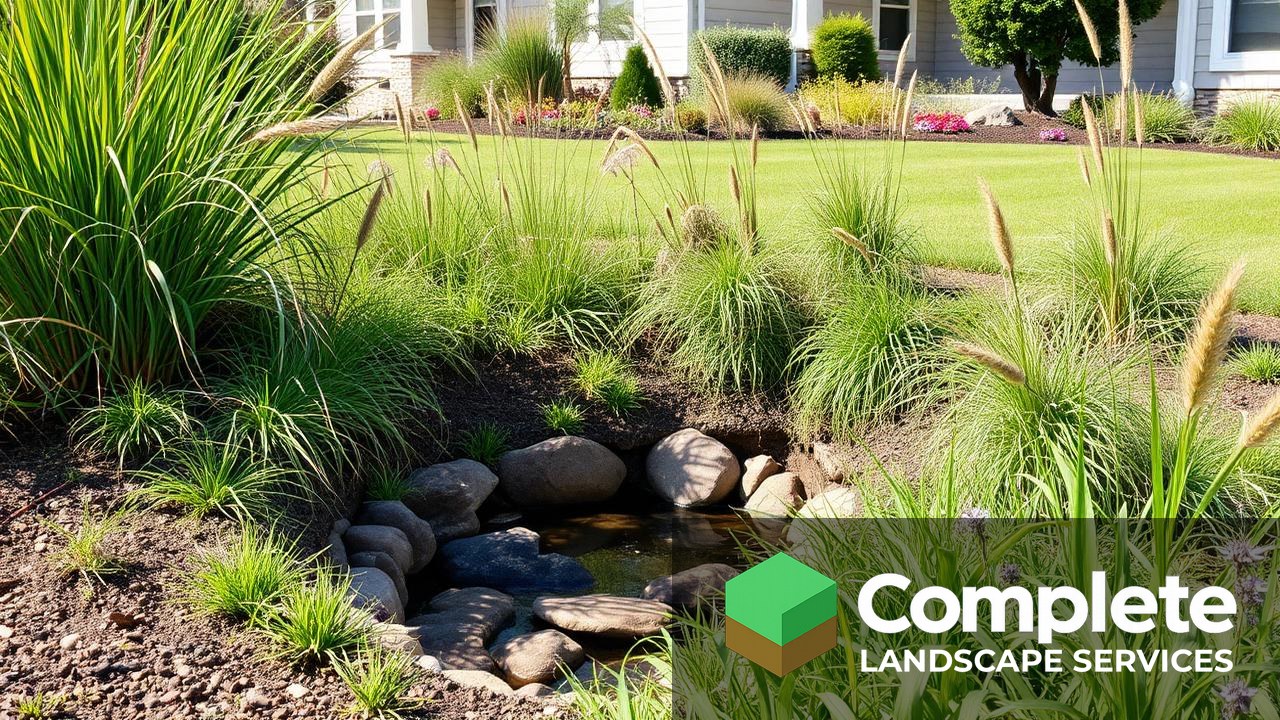
Rain gardens are the best-looking option and often the cheapest at scale. A shallow planted depression positioned along the natural flow path, planted with sedges, switchgrass, and other deep-rooted natives, absorbs a surprising volume and keeps improving as roots open the soil profile.
On sloped lots, the drainage fix and the usability fix are often the same project. Terracing a slope with walls interrupts sheet flow and creates level ground at the same time; our roundup of retaining wall ideas covers the drainage detailing those walls require behind them.
How much does fixing lawn drainage cost?
Costs range from under $100 for downspout extensions to $6,000 or more for comprehensive regrading with a piped drainage system. Most homeowners solve their problem in the $500 to $3,000 range, and the cheapest fixes, downspout work and core aeration, resolve a surprising share of complaints on their own.
Work from cheapest to most invasive. Extend the downspouts, aerate and topdress with compost, and observe through one full wet season. If water still stands, you have ruled out the easy causes and can invest in grading or drainage with confidence that you are buying the right fix.
Get quotes that specify the outlet. Any drainage proposal that does not clearly state where the water goes is incomplete, regardless of price.
Timing helps too. Autumn is the natural moment to do drainage work in most climates, since the ground is workable, turf recovers well, and you want the system in place before winter. Our fall landscaping tips cover how drainage work fits alongside the rest of the seasonal checklist.
| Solution | Typical cost | Best for | DIY friendly |
|---|---|---|---|
| Downspout extensions | $30 to $200 | Foundation puddles from roof runoff | Yes |
| Core aeration and compost topdressing | $150 to $500 | Compacted soil, slow infiltration | Yes |
| Regrading near foundation | $500 to $3,000 | Negative slope toward the house | Partly |
| French drain | $15 to $35 per linear ft | Persistent wet areas with a downhill outlet | Partly |
| Dry well | $1,200 to $3,500 | Flat lots with no outlet available | No |
| Rain garden | $400 to $2,500 | Runoff paths, sustainable infiltration | Yes |
| Full system with catch basins | $3,000 to $8,000 | Multiple problem areas, large properties | No |
Frequently Asked Questions
The bottom line
Diagnose before you dig. Establish whether the problem is grade, soil, or volume, fix the cheap causes first, and only then invest in excavation. Downspout extensions and aeration solve a large share of residential drainage complaints for a few hundred dollars, and when a drain really is needed, the outlet matters more than the trench.
Thinking bigger picture? Read our full guide on How to Start a Landscaping Company, or visit our member directory to connect with vetted Complete Landscape Services professionals.
Need professional help?
Browse our member directory to find trusted Complete Landscape Services professionals for irrigation & drainage and more.
Our Member Directory