How Much Does Landscaping Cost? A 2026 Price Guide for Homeowners
Table of Contents
Landscaping cost is the first question almost every homeowner asks, and it is the hardest one to answer honestly without seeing the property. A yard is not a product with a sticker price. It is a series of separate trades, excavation, grading, drainage, hardscape, irrigation, planting, and turf, each priced by quantity, access, and site conditions. That said, the numbers are far from random. Contractors across the USA and Canada price from a consistent set of unit rates, and once you know those rates you can sanity-check any quote you receive. This guide breaks landscaping cost down project by project, explains the five variables that move a price the most, and shows where homeowners routinely overspend or underspend for the result they actually want.
How much does landscaping cost on average?
Average residential landscaping costs $4 to $12 per square foot installed. A basic refresh of a front yard runs $3,000 to $8,000, a mid-range renovation with new beds, plants, and a walkway runs $8,000 to $20,000, and a full backyard build with patio, wall, and lighting commonly reaches $30,000 to $75,000.
A useful planning benchmark is 5 to 10 percent of the home's value for a complete landscape, which is roughly where the resale return stops improving. Below that range you tend to get planting and turf only. Above it you are usually paying for hardscape, structures, and lighting, which is where the budget accelerates quickly.
Recurring maintenance is priced separately and should be in your plan from day one. Weekly mowing and seasonal service typically costs $150 to $400 per month for a standard residential lot, and a newly planted landscape needs more attention, not less, during its first two seasons.
It also helps to know how contractors arrive at a number in the first place. Our guide on how to price landscaping jobs walks through the labor, material, overhead, and margin math behind a quote, and reading it makes any estimate you receive far easier to evaluate.
| Project | Typical cost | Unit | Notes |
|---|---|---|---|
| Lawn mowing and maintenance | $45 to $90 | per visit | Weekly or biweekly, standard residential lot |
| Mulch installation | $70 to $130 | per cubic yard installed | Covers about 100 sq ft at 3 inches |
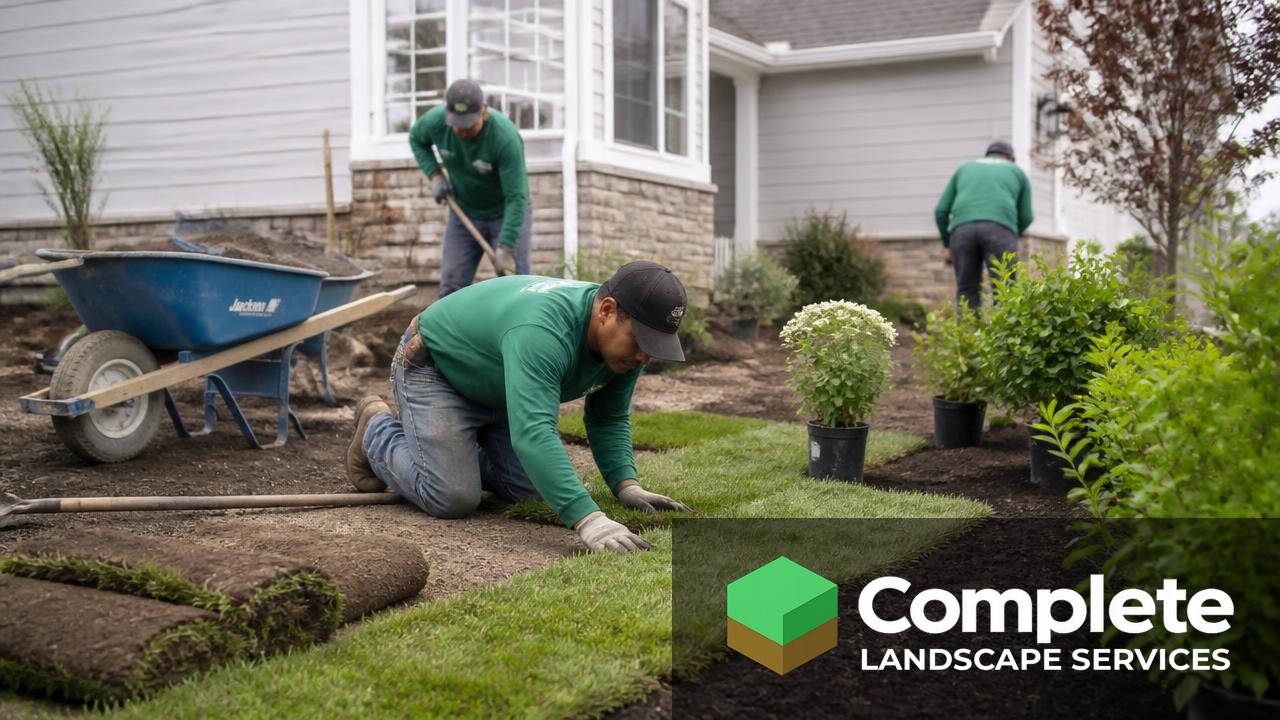
| Sod installation | $1.50 to $3.50 | per sq ft | Includes grading and prep |
| Grass seed and overseeding | $0.15 to $0.60 | per sq ft | Lower cost, longer establishment |
| Planting beds with shrubs | $15 to $40 | per sq ft | Depends on plant size and density |
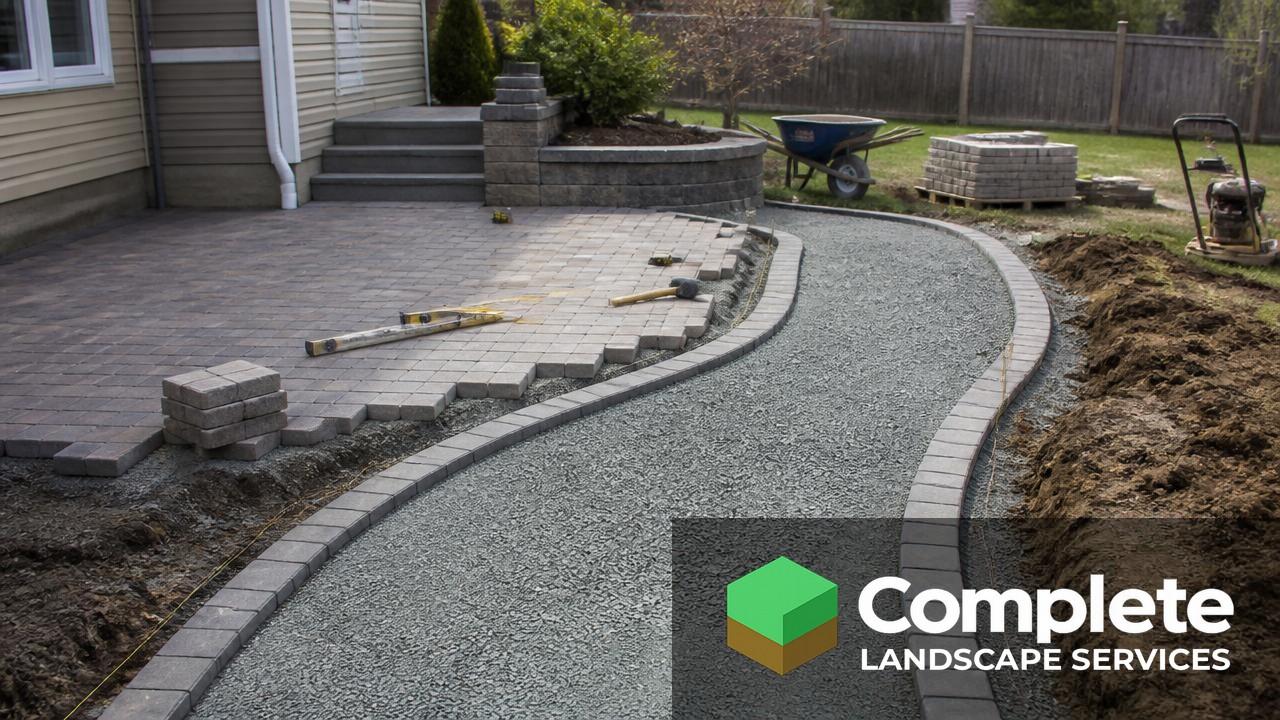
| Paver patio | $15 to $30 | per sq ft | Base depth drives cost in freeze-thaw regions |
| Retaining wall | $35 to $90 | per face sq ft | Engineering required above 4 feet |
| Irrigation system | $3,000 to $8,000 | per system | 6 to 10 zones, typical residential lot |
| Landscape lighting | $120 to $350 | per fixture installed | Transformer and wiring included |
| Drainage correction | $1,500 to $6,000 | per project | French drains, regrading, dry wells |
What drives the difference between two landscaping quotes?
Five variables explain most quote differences: site access, soil and existing conditions, disposal volume, material grade, and the depth of preparation under the surface. Two contractors can look at the same yard and price it $8,000 apart because one is building on 4 inches of base and the other on 10.
Access is the most underestimated factor. A backyard reachable by a skid steer costs a fraction of the same backyard reachable only through a 32-inch gate, because every cubic yard of material arrives by wheelbarrow. On tight urban lots, wheelbarrow access can add 30 to 60 percent to the labor line.
Disposal is the second. Excavated soil, demolished concrete, and old sod all leave the property by truck, and tipping fees plus haul time are real costs that low quotes often quietly exclude.
The third is what you cannot see after the job is finished. Base depth, compaction, geotextile fabric, and drainage aggregate are invisible on day one and decisive by year five. When a quote is dramatically cheaper, this is almost always where the money was removed.
How much does lawn care cost per year?
Annual lawn care for a typical quarter-acre residential lot costs $1,200 to $3,600 depending on visit frequency and which services are bundled. A weekly mowing package alone runs $1,400 to $2,400 per season, while a full program with fertilization, aeration, and cleanups reaches $2,500 to $4,000.
Most providers sell a season package rather than individual visits, because route density is what makes the work profitable. Committing to a full season almost always costs less per visit than calling for one-off service.
Aeration and overseeding are the two add-ons with the clearest return, and the timing matters more than the spend. Our guide on when to aerate your lawn explains the right window for cool-season and warm-season grasses, which is the difference between a $300 service that transforms a lawn and one that accomplishes nothing.
Watering is the hidden operating cost nobody quotes. A poorly scheduled irrigation system can add hundreds of dollars a season to a water bill while producing a worse lawn, which is why how often you should water your lawn is worth reading before you spend anything on turf.
How much does hardscaping cost compared to planting?
Hardscaping typically costs five to ten times more per square foot than planting. A paver patio runs $15 to $30 per square foot while a planted bed with mulch runs $15 to $40 per square foot at install but only $3 to $8 per square foot if you plant smaller stock and let it grow in.
This ratio is the single most useful budgeting insight for homeowners. If a design comes back over budget, reducing hardscape square footage saves far more than substituting plants, and a slightly smaller patio built properly outperforms a large one built on a thin base.
Hardscape also carries the longer life. A well-built paver patio lasts 30 to 50 years, so its annualized cost is often lower than the planting around it. Our overview of what hardscaping is covers the material trade-offs in detail, and how to install a patio shows exactly where the labor hours go.
Retaining walls are the exception to every rule of thumb, because cost scales with height rather than area. Anything over 4 feet generally requires engineering, geogrid reinforcement, and permitting, which can double the per-square-foot price.
Is landscaping worth the cost?
Yes, in measurable terms. Well-executed landscaping returns roughly 100 to 150 percent of its cost at resale according to long-running appraiser surveys, and mature trees alone can add several percent to a property's value. Maintenance, not installation, is what determines whether that value holds.
The return is not evenly distributed. Curb appeal work at the front of the house, healthy turf, a defined entry walkway, and layered planting, consistently recovers more than specialty features like water gardens or elaborate outdoor kitchens, which are strongly taste-dependent.
Drainage work returns nothing visually and everything financially. Water directed away from a foundation prevents structural repairs that cost many times the price of a French drain, which is the highest-return money in most landscape budgets.
For commercial owners the calculation is different but stronger, since grounds appearance directly affects leasing, retail traffic, and tenant retention. Our article on what landscaping companies do outlines the service scopes that property managers usually contract.
How can you reduce landscaping costs without cutting quality?
Phase the project, buy smaller plant stock, keep hardscape geometry simple, do your own demolition and cleanup, and schedule in the off season. These five moves routinely cut 20 to 35 percent from a landscape budget without touching the structural quality of the work.
Phasing is the most effective. Build the grading, drainage, and hardscape first, because those are the items that are expensive to retrofit, then add planting, lighting, and irrigation in later seasons as budget allows.
Plant size is the easiest saving with the smallest long-term penalty. A 3-gallon shrub costs a third of a 7-gallon one and catches up within two or three growing seasons, while established trees are the one category where paying for size is usually worth it.
Timing matters too. Late fall and very early spring are slow periods for most crews, and scheduling then often earns a better price than peak May and June, when every contractor in your region is booked.
Frequently Asked Questions
The bottom line
Landscaping cost comes down to quantity, access, and how much of the budget goes underground where nobody sees it. Use the unit rates in this guide to test any quote you receive, insist that base depth and drainage provisions be written into the scope, and phase the work if the full plan exceeds your budget rather than thinning out the parts that hold everything together. A yard built correctly in stages will outlast and outperform one built all at once on a compromised foundation.
Thinking bigger picture? Read our full guide on How to Start a Landscaping Company, or visit our member directory to connect with vetted Complete Landscape Services professionals.
Need professional help?
Browse our member directory to find trusted Complete Landscape Services professionals for lawn care & maintenance and more.
Our Member Directory