
Commercial Landscaping: What to Expect from a Full-Service Provider
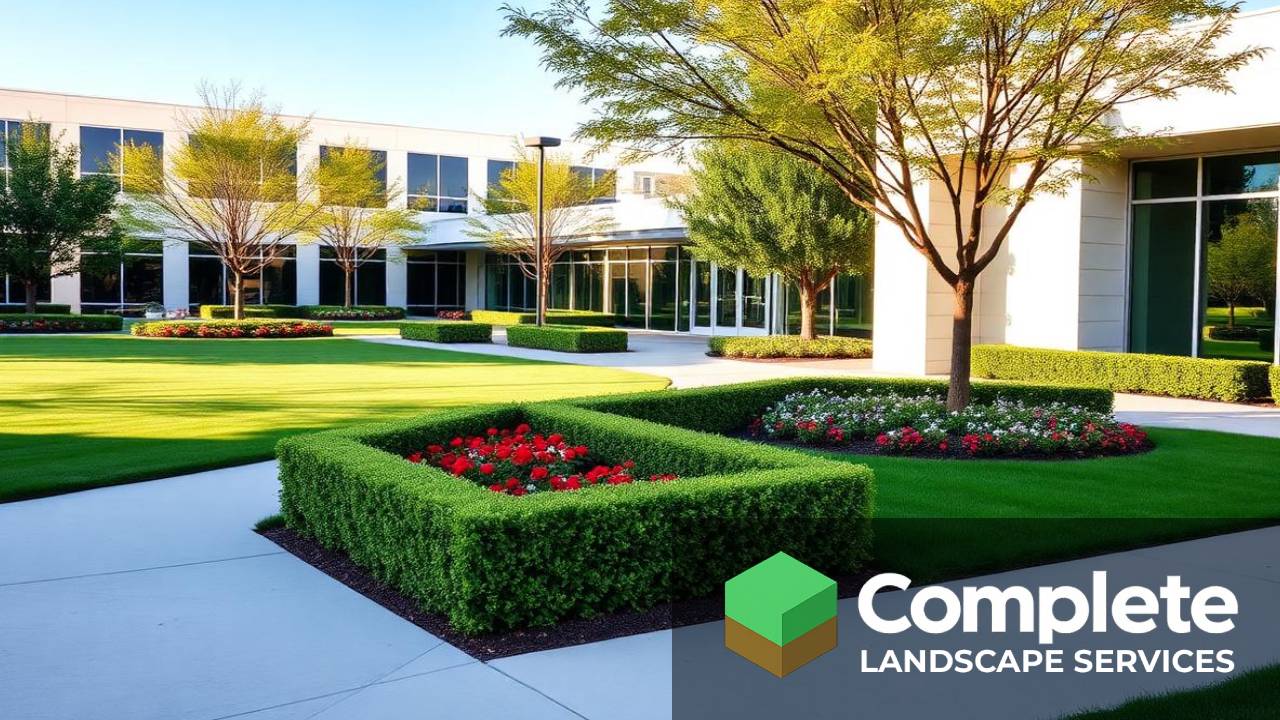
Table of Contents
Commercial landscaping is grounds management on a contract, disciplined, scheduled, and measured against KPIs that matter to property owners and managers. A full-service commercial landscaping provider does far more than mow grass: they handle weekly turf care, seasonal flower rotations, fertilization and weed control, irrigation operation, tree and shrub pruning, mulch refresh, and (in northern markets) snow and ice management. This guide breaks down what a typical commercial landscaping contract actually includes for office parks, retail centers, HOAs, and medical campuses across the USA and Canada, and the line items that are commonly extra so you can compare bids apples-to-apples.
What does a commercial landscaping contract include?
A standard commercial landscaping contract includes weekly mowing and edging, regular hedge trimming, seasonal fertilization and weed control, mulch refresh once or twice per year, irrigation operation and basic repairs, leaf removal, and a defined scope of tree and shrub pruning. Snow removal is typically a separate seasonal contract.
The weekly visit is the heartbeat of commercial maintenance. A typical crew arrives with a full set of equipment, mows all turf areas, edges hard surfaces, blows clippings off all walkways and parking, trims one or more shrub zones on rotation, and addresses any obvious issues (broken sprinkler head, washed-out mulch, storm damage). The visit is documented with date, time, crew, and notes.
Higher-end contracts include enhancements at no additional charge: weed pulling in beds, deadheading flower displays, raising mower decks during summer drought, and prompt response to tenant complaints. Lower-bid contracts often strip these out, read carefully.
What's usually NOT included in a commercial landscape contract?
Items typically excluded from base commercial landscaping contracts are: snow and ice management (separate seasonal contract), major tree work (removals, large limb pruning), irrigation system repairs beyond a small allowance, seasonal flower installation, mulch material cost, pest disease treatments, and any storm damage cleanup.
These exclusions aren't a red flag, they're standard industry practice because the cost varies too widely to bundle. A good provider will quote them as add-ons with clear unit pricing (e.g., '$45 per cubic yard installed for hardwood mulch,' '$185 per hour for arborist crew'), so you can budget predictably across the year.
Watch for contracts that bundle 'as needed' irrigation repairs into the base price, they almost always come with strict caps that turn into surprise invoices.
How much does commercial landscaping cost?
Commercial landscaping contracts typically run $1,200–$4,500 per acre per year for full-service maintenance in most US and Canadian markets. Pricing varies with site complexity, frequency of visits, regional labor costs, and the scope of included services. Snow and ice contracts are usually separate and priced per event or per season.
The biggest cost drivers are mowing frequency (weekly is standard April–October in most regions), the ratio of turf to beds (beds are more labor-intensive per square foot), and the quality bar, Class A office parks with high tenant expectations cost noticeably more than industrial or warehouse properties with the same square footage.
Always get bids from at least three providers and compare scope line-by-line, not just total price. The cheapest bid is almost always the one with the most exclusions.
How do I choose a commercial landscaping company?
Evaluate commercial landscaping companies on five criteria: insurance and licensing (general liability, workers comp, pesticide applicator license), references from similar property types, written scope of work with line-item pricing, in-house equipment and crew (vs heavy subcontracting), and a defined account manager you can reach without going through a call center.
Ask for the contact information of three current clients with properties similar in size and type to yours, and actually call them. Ask about response time for issues, accuracy of invoicing, and how the provider handled the last storm or unusual event.
A reliable provider will also walk the property with you before bidding and provide a written, photo-marked scope, not just a per-square-foot quote based on satellite imagery.
Frequently Asked Questions
The bottom line
A good commercial landscaping contract is a partnership, a defined scope, clear pricing, and an account manager who treats your property like their own. Take the time to compare bids on scope rather than price, check references, and lock in a provider who shows up the same day every week. Looking for a commercial landscaping partner? Complete Landscape Services manages commercial properties across the USA and Canada, request a property walk and proposal.
Thinking bigger picture? Read our full guide on How to Start a Landscaping Company, or visit our member directory to connect with vetted Complete Landscape Services professionals.
Need professional help?
Browse our member directory to find trusted Complete Landscape Services professionals for commercial landscaping and more.
Our Member Directory