
Drip Irrigation vs Sprinkler System: Which Is Better?
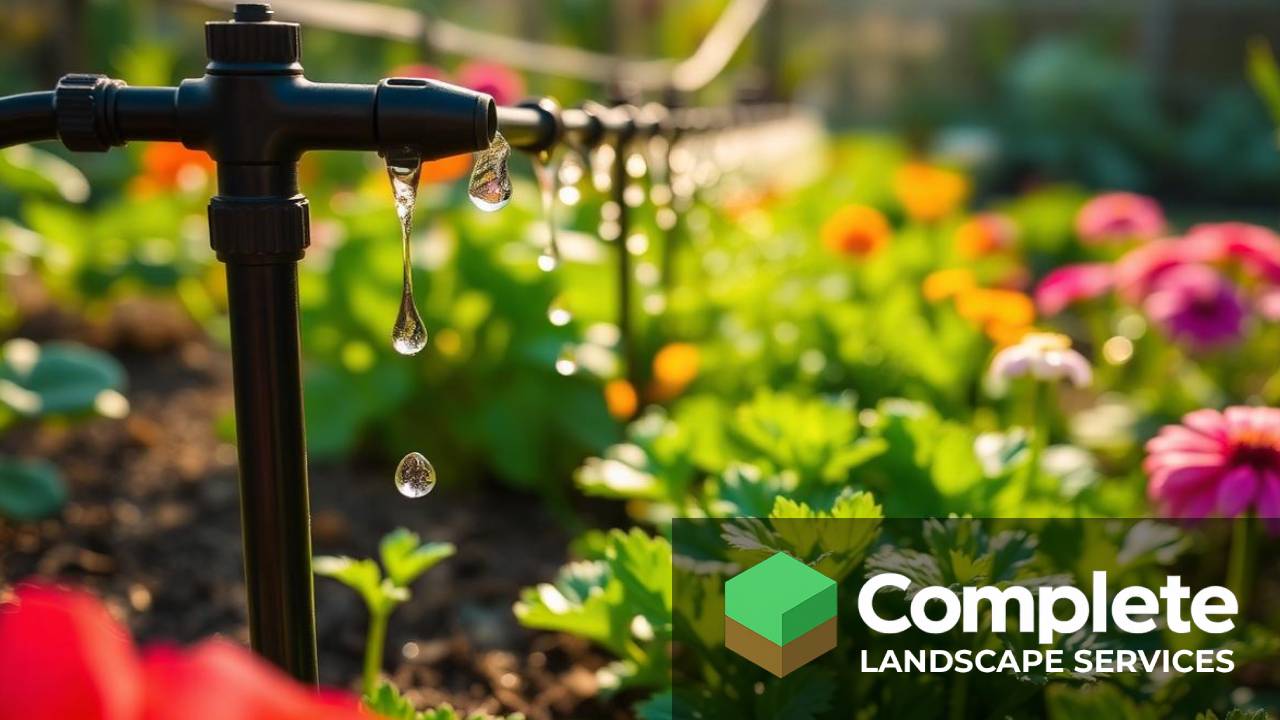
Table of Contents
Drip irrigation versus sprinkler isn't really an either/or choice, most well-designed irrigation systems use both, with each system matched to the plants it waters best. Drip irrigation delivers water slowly to the root zone of garden beds, foundation plantings, and trees with up to 50% less water waste than overhead sprinklers. Sprinklers, on the other hand, are still the right tool for any continuous lawn area larger than a few hundred square feet. This guide compares cost, water efficiency, installation difficulty, and long-term maintenance so you can specify the right system, or combination, for your yard.
What's the difference between drip and sprinkler irrigation?
Sprinkler irrigation sprays water through the air across a wide area, mimicking rainfall. Drip irrigation delivers water through low-flow emitters placed at each plant's root zone. Sprinklers cover lawns efficiently; drip targets individual plants and minimizes evaporation, runoff, and weed growth between plants.
Sprinkler systems typically run for 15–30 minutes a few times per week at flow rates of 1.5–3 gallons per minute per zone. Drip systems run for 1–2 hours but at flow rates of just 0.5–2 gallons per hour per emitter, far less water moving far more slowly.
Drip systems also operate at much lower pressure (15–25 PSI vs 40–60 PSI for sprinklers), which means longer component life and the ability to run zones in series that sprinklers couldn't share.
Which is more water-efficient: drip or sprinkler?
Drip irrigation is significantly more water-efficient, 90–95% of water reaches plant roots compared to 65–75% for sprinklers. The difference comes from eliminating evaporation, wind drift, and runoff. For garden beds and foundation plantings, drip can cut water use in half versus sprinklers.
Sprinkler waste isn't always obvious. On a hot, breezy day, 25–35% of water from a typical pop-up spray head evaporates before it reaches the soil. Water that lands on driveways, sidewalks, or compacted soil runs off rather than soaking in. Drip irrigation, properly designed, eliminates almost all of those losses.
Many municipalities in drought-prone regions of the USA and Canada now offer rebates of $2–$4 per square foot when you replace overhead sprinklers in landscape beds with drip, check your local water utility before installing.
When should I use sprinklers instead of drip?
Use sprinklers for lawns, turf, large groundcover areas, and any continuous planting where you need uniform overhead coverage. Sprinklers are also faster to install across large areas and cheaper per square foot of coverage when the area exceeds about 1,000 square feet of continuous lawn.
Drip irrigation a lawn doesn't work, you can't get uniform coverage across thousands of grass plants without overhead distribution. Modern rotor and rotary nozzle sprinklers have closed much of the efficiency gap with drip for turf areas, with matched-precipitation rates and pressure regulation reducing waste significantly.
The right design for most properties uses sprinklers on the lawn zones and drip on every garden bed, foundation planting, and tree well, controlled by the same smart controller but on separate zones with different run times.
How much does each system cost to install?
A drip irrigation system for a typical 500-square-foot garden bed runs $300–$800 in materials for DIY or $800–$2,000 installed. A full lawn sprinkler system for a quarter-acre lot runs $3,000–$5,000 DIY in materials or $4,500–$8,000+ professionally installed, depending on zones, controller, and water source.
Drip is far more DIY-friendly because it operates at low pressure and uses push-fit fittings, no glue, no trenching beyond a shallow furrow to hide the supply line. Sprinkler installation requires trenching, sometimes a backflow preventer, and pipe sized correctly to your water source, work that's usually faster and cleaner with a professional crew.
Frequently Asked Questions
The bottom line
Drip irrigation and sprinklers each excel at different jobs, the smartest yards use both. Specify drip for every bed, tree, and foundation planting, sprinklers for the lawn, and connect them through a single smart controller for the lowest possible water bill. Need help designing or installing? Complete Landscape Services handles complete irrigation system installation across the USA and Canada, request a free design and water-use audit.
Thinking bigger picture? Read our full guide on How to Start a Landscaping Company, or visit our member directory to connect with vetted Complete Landscape Services professionals.
Need professional help?
Browse our member directory to find trusted Complete Landscape Services professionals for irrigation & drainage and more.
Our Member Directory