
Low Maintenance Landscaping Ideas That Still Look Designed
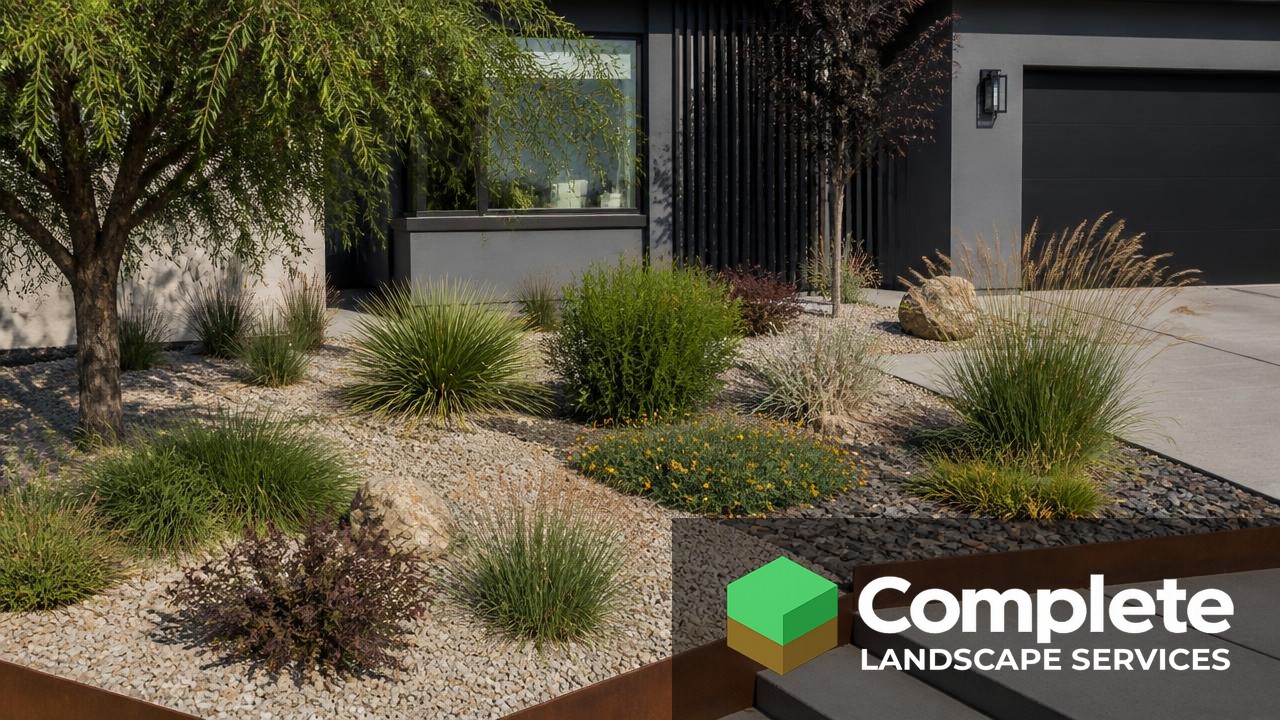
Table of Contents
Low maintenance landscaping has an image problem, largely because it is so often delivered as a rock field with a few junipers dropped into it. Done properly, it is the opposite of bare: dense planting that shades out weeds, a smaller but genuinely healthy lawn, crisp permanent edges that eliminate weekly trimming, and irrigation that runs itself. The design goal is to remove recurring labor without removing interest. This guide covers where the hours actually go in a typical yard, the changes that eliminate them, what each change costs to install, and the mistakes that create more work than they save.
Where does yard maintenance time actually go?
In a typical residential yard, mowing, string trimming, and edging consume the largest block of time, followed by weeding open bed space, watering, and seasonal cleanup. Reducing lawn area and closing bare bed space therefore removes more labor than any other change.
Trimming is disproportionately slow. Every fence post, tree ring, downspout, and bed corner that a mower cannot reach turns into hand work each week.
Weeding scales with exposed soil. A bed at full plant coverage with adequate mulch depth has very little available real estate for weed seed to establish in.
Track a couple of weekends honestly before redesigning anything. Most people find the time is going somewhere other than where they assumed.
How do you reduce lawn without losing curb appeal?
Keep lawn where it is used and shaped simply, and convert the rest to planted beds, groundcover, or hardscape. A smaller lawn with one continuous sweeping edge mows faster and reads as more intentional than a large lawn broken up by obstacles.
Remove the awkward strips first: narrow side yards, slopes too steep to mow safely, the deep shade under mature trees where turf never establishes, and the fragments between driveway and walk.
Design for the mower. One continuous curve is faster to cut and edge than several straight segments interrupted by tree rings and planters.
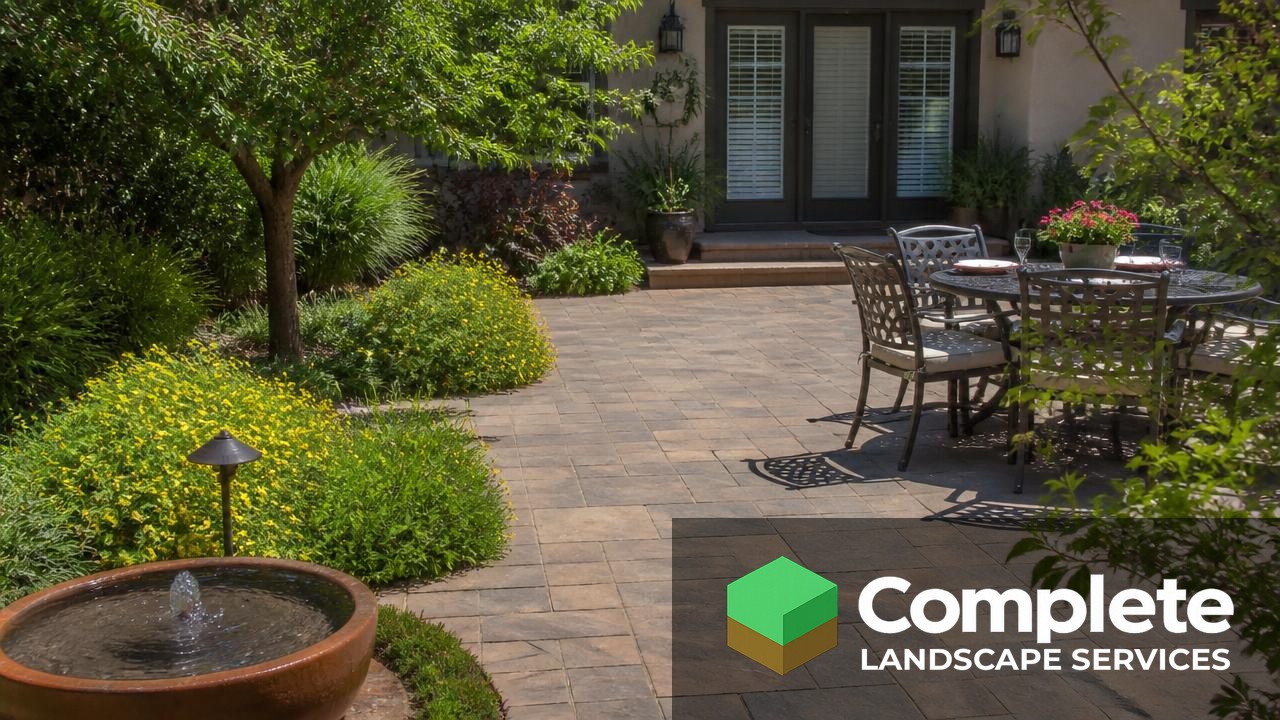
Groundcovers such as creeping thyme, sedge, or clover work well on light-traffic areas, while shade under trees is usually better as a mulched bed with woodland planting than a losing turf battle.
Which plants are genuinely low maintenance?
Regionally adapted native and drought tolerant species with a natural mature size that matches the space they occupy. The single largest source of ongoing plant work is shearing shrubs that were planted too close together and grow larger than the bed allows.
Choose by mature size first and appearance second. A shrub that reaches four feet placed in a four-foot space needs almost no pruning, while the same shrub placed in a two-foot space needs shearing twice a year forever.
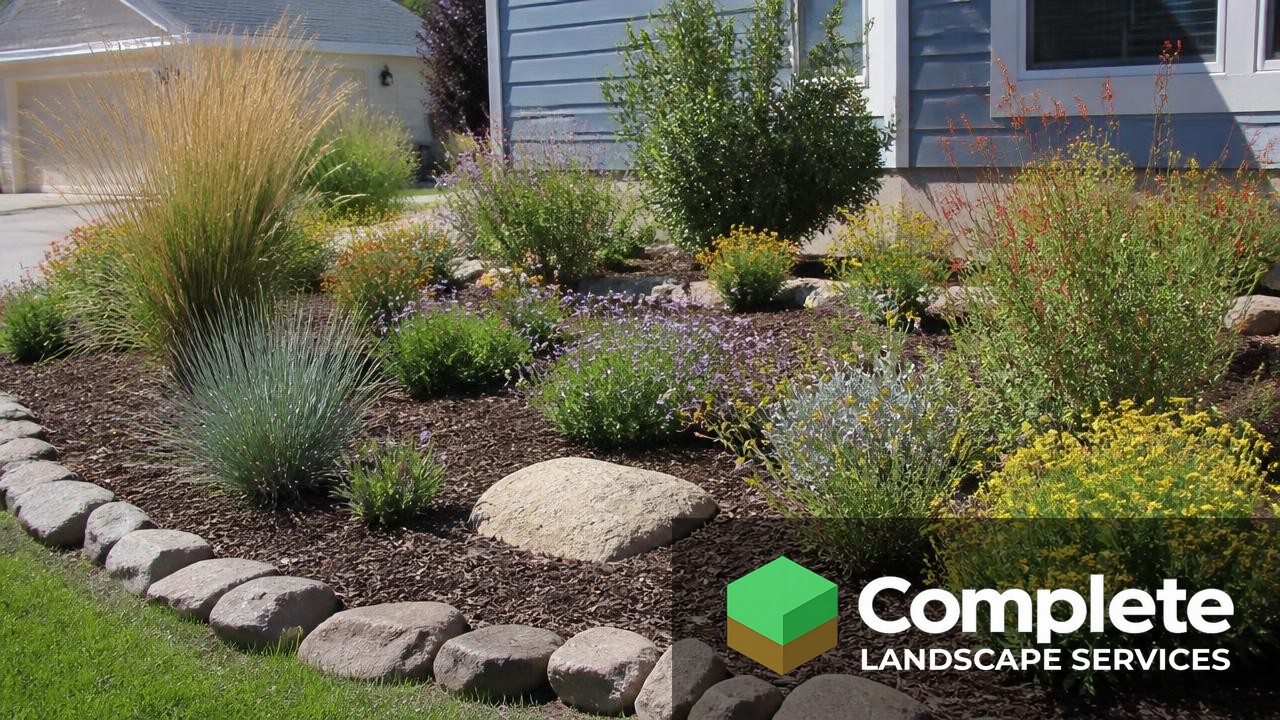
Perennial grasses, hardy perennials, and evergreen structure shrubs deliver year-round interest with one annual cutback rather than weekly attention.
Plant in drifts of the same species rather than one of everything. It looks more deliberate, and it makes care decisions uniform across the bed.
| Element | Weekly work | Annual work | Install cost |
|---|---|---|---|
| Traditional lawn | Mow, trim, edge | Fertilize, aerate, overseed | Low |
| Groundcover | None | One cutback or tidy | Medium |
| Mulched shrub bed | Occasional weeding | Mulch top-up, light pruning | Medium |
| Perennial bed | Minimal | Spring cutback, dividing | Medium |
| Gravel or stone bed | Occasional weeding | Top-up, weed control | Medium |
| Paver patio or path | Sweeping | Joint sand, occasional reset | High |
How do mulch and edging cut maintenance?
Three inches of mulch suppresses most weed germination and reduces watering frequency, while permanent edging in steel, aluminium, stone, or concrete eliminates the weekly string trimming that bed lines otherwise require. Together they remove a large share of routine yard work.
Depth is what does the work. Under two inches lets light reach soil and weeds establish, while more than four inches can suffocate shallow roots, so three inches is the practical target.
A mowing strip of pavers or concrete set flush at bed edges lets a mower wheel ride along it, which removes trimming along that line entirely.
Avoid landscape fabric under organic mulch. It fails within a few years as mulch breaks down above it into a weed-friendly layer, and then it is extremely unpleasant to remove.
What irrigation setup requires the least attention?
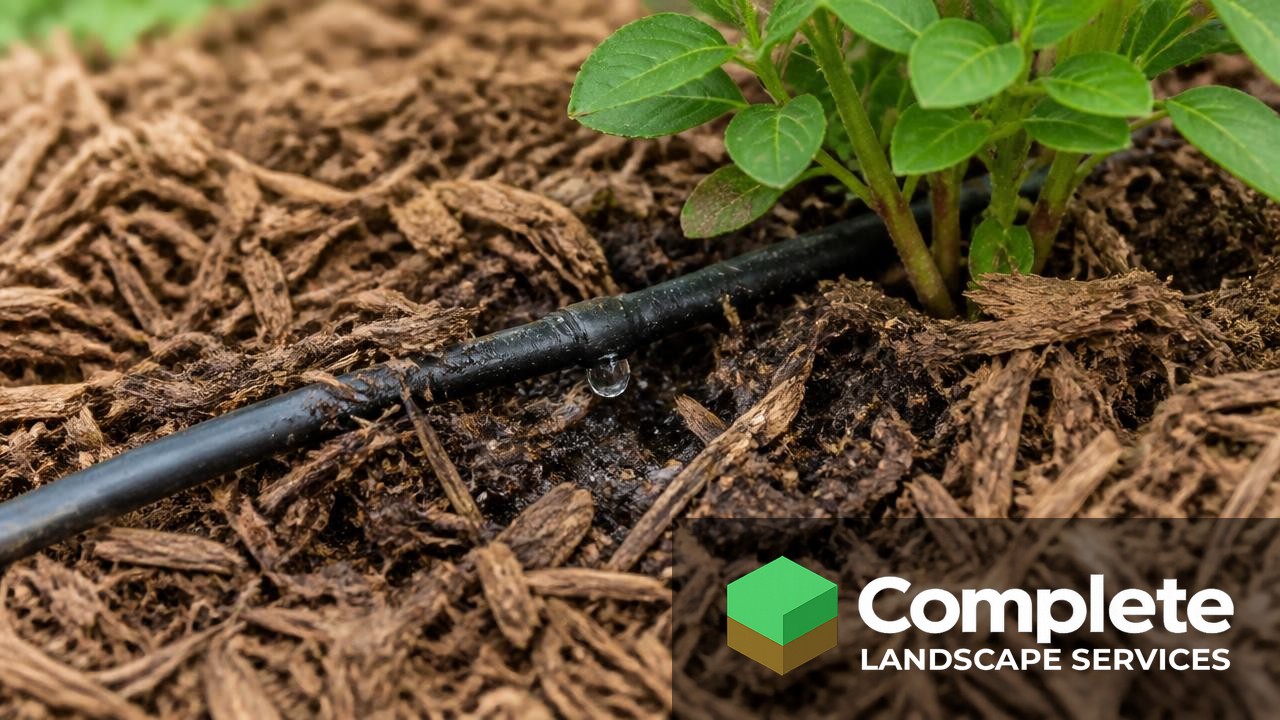
Drip irrigation on beds with a smart controller, kept separate from any lawn zones, is the lowest attention setup available. Drip delivers water at the root zone with far less evaporation and, unlike overhead spray, does not wet foliage or feed the weeds between plants.
Separating bed zones from lawn zones matters because their water needs are entirely different, and running them together guarantees one of them is wrong.
A controller with a rain sensor or local weather data eliminates the most common irrigation failure, which is a timer running through a rainy week.
Our comparison of drip irrigation versus sprinklers covers where each system fits, and how often to water your lawn sets the schedule for the turf you keep.
Does low maintenance mean low cost?
No. Low maintenance designs usually cost more to install, because they front-load the work into permanent edging, denser planting, irrigation, and hardscape. They pay back in reduced labor, water, and replacement costs over five to ten years.
A useful way to frame it is that you are buying out future weekends. The installed cost is higher, and the recurring cost, in money or in your own time, is much lower.
Phasing works well. Convert the highest-effort area first, usually the narrow or steep spaces that are slowest to mow, and expand from there in later seasons.
For typical installed ranges on the elements involved, see our guide on how much landscaping costs.
Frequently Asked Questions
The bottom line
Low maintenance is the product of four decisions: keep only the lawn you use, plant species suited to your region at their true mature size, give every bed permanent edging and three inches of mulch, and put the beds on drip with a smart controller. Make those and the yard stops demanding weekly attention while still looking like someone designed it on purpose.
Thinking bigger picture? Read our full guide on How to Start a Landscaping Company, or visit our member directory to connect with vetted Complete Landscape Services professionals.
Need professional help?
Browse our member directory to find trusted Complete Landscape Services professionals for lawn care & maintenance and more.
Our Member Directory