
How to Protect Plants in Winter: Trees, Shrubs, and Perennials
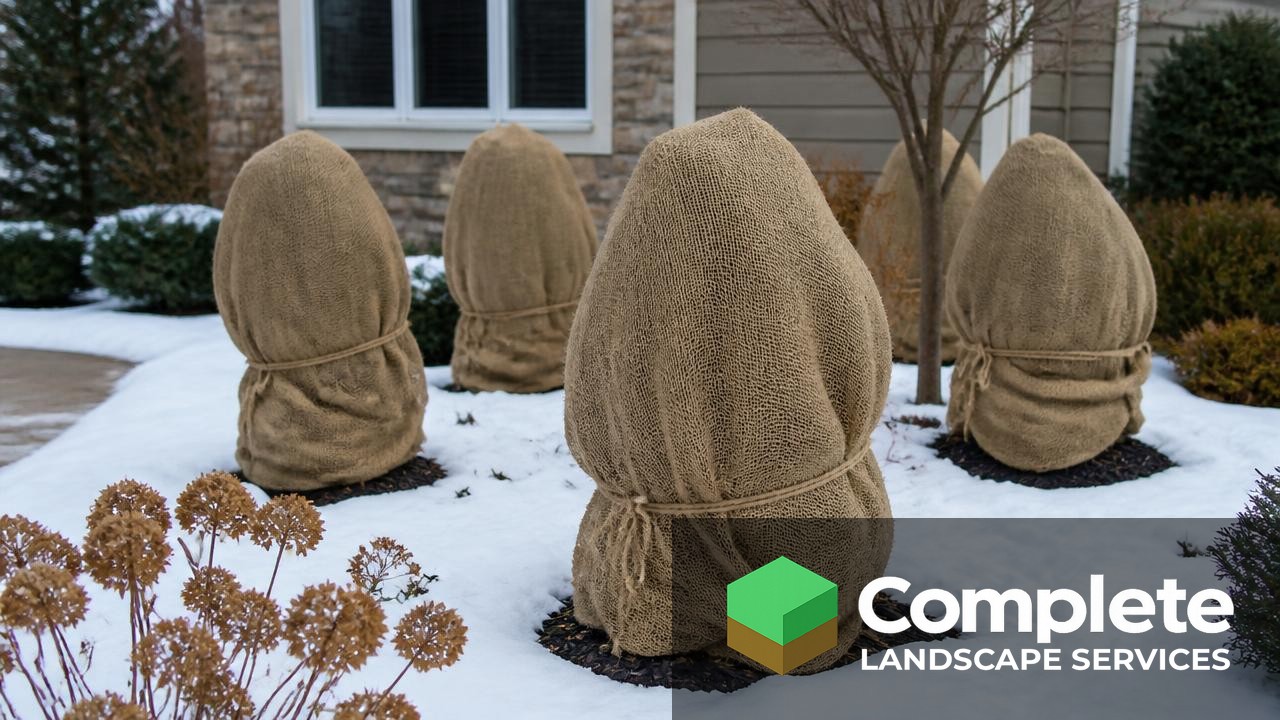
Table of Contents
Plants rated for your hardiness zone do not usually die of cold. They die of the things that accompany cold: frozen soil that cuts off water while winter sun keeps pulling moisture from evergreen foliage, bark that warms on a bright February afternoon and refreezes at nightfall, voles working under the snow, salt spray from a plowed driveway, and heavy wet snow splitting a multi-stem shrub apart. Every one of those failure modes has a cheap, simple countermeasure, and nearly all of them have to be in place before the ground freezes. This guide covers what to do in late autumn, what to protect, and the common protective measures that actually cause damage.
Why do plants die over winter?
The main causes are winter desiccation, where evergreens lose moisture through foliage while frozen soil prevents replacement, sunscald on thin young bark, frost heave that lifts shallow-rooted perennials out of the ground, rodent feeding on bark under snow, and salt damage from roads and walkways.
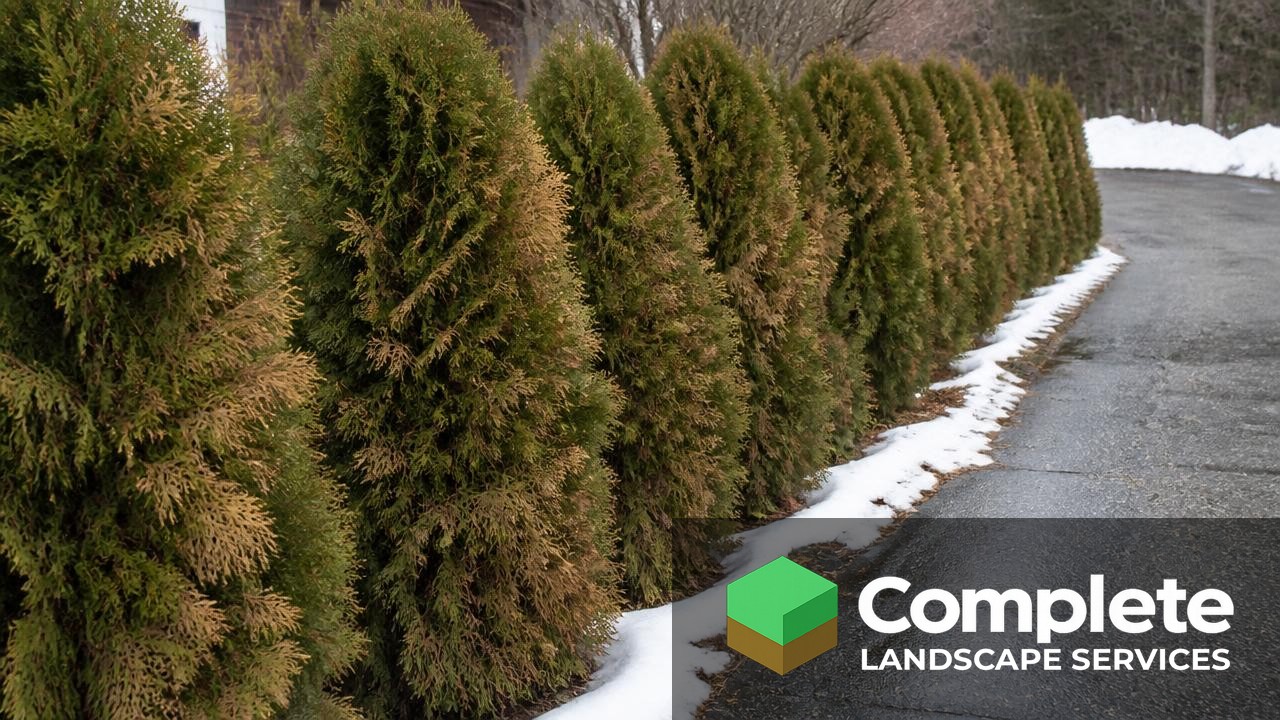
Desiccation explains most brown evergreens in spring. Wind and winter sun keep the foliage transpiring, and once the soil is frozen there is nothing to replace what is lost, so the plant dries out while standing in frozen water.
Frost heave affects newly planted perennials and small shrubs in particular. Repeated freeze and thaw cycles push the root ball upward until roots are exposed to air, which is why mulch applied after the soil cools is so effective.
Rodents are quietly destructive. Voles and rabbits girdle young trunks under the protection of snow, and a fully girdled trunk means the tree is dead in spring no matter how healthy it looked in November.
Should you water plants before winter?
Yes. Deep watering in late autumn, continuing until the ground freezes, is the single most effective winter protection measure, especially for evergreens and anything planted within the last two years. Well-hydrated tissue resists both desiccation and cold injury far better than dry tissue.
Focus on evergreens, broadleaf evergreens such as rhododendron and boxwood, and any tree or shrub planted in the past two seasons. Established deciduous trees generally manage on their own unless the autumn has been unusually dry.
Water slowly and deeply at the drip line rather than briefly at the trunk. A soaker hose running at low volume for an hour delivers far more usable moisture than ten minutes with a spray nozzle.
Coordinate this with irrigation shutdown so you are not left without a way to water. Our guide on how to winterize a sprinkler system covers the timing, and hand watering covers the gap afterward.
When and how should you mulch for winter?
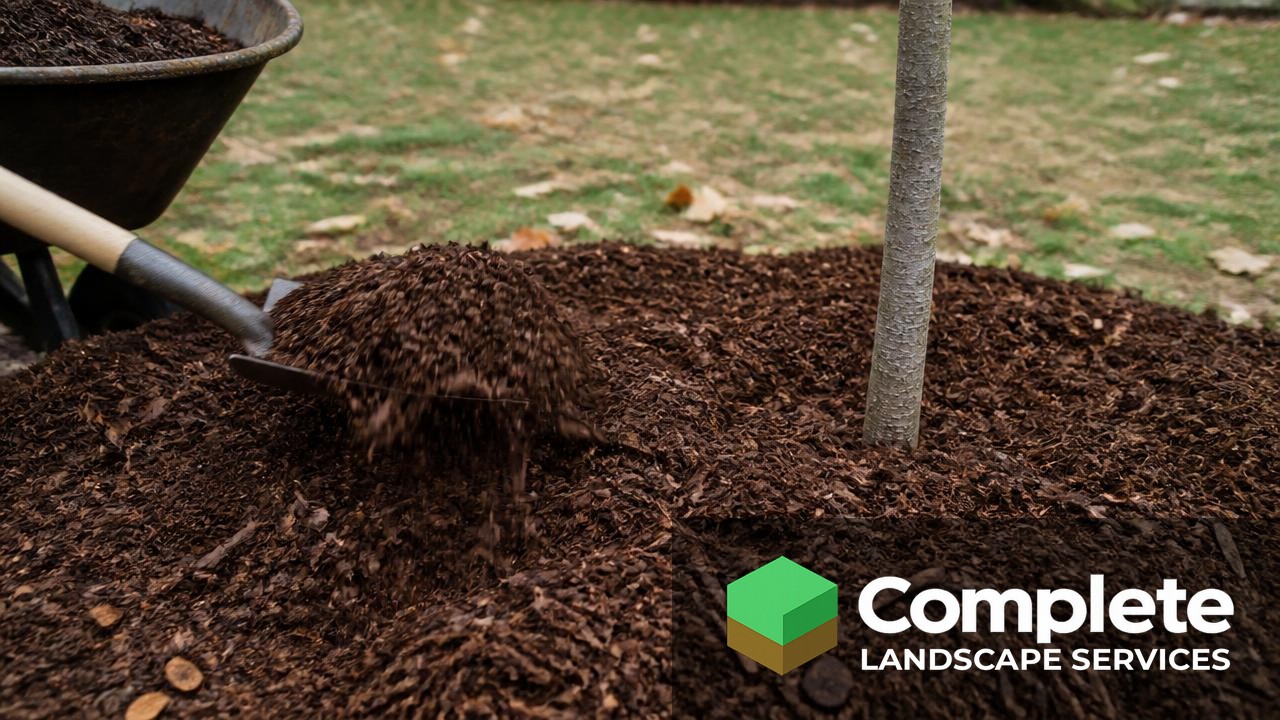
Apply 2 to 4 inches of shredded bark, leaf mould, or straw after the soil has cooled but before it freezes hard, usually in late November in most northern regions. Winter mulch works by keeping soil temperature stable and preventing freeze-thaw heaving, not by keeping roots warm.
Timing matters in both directions. Mulching too early keeps the soil warm and invites rodents to nest in it, while mulching after the soil freezes locks in cold and delays spring warming.
Keep mulch off the trunk. A mulch volcano piled against bark holds moisture against it, encourages rot and rodent activity, and is one of the most common causes of decline in young landscape trees.
On perennial beds, wait until after several hard frosts and the plants have gone fully dormant, then cover the crowns loosely. Evergreen boughs from a discarded holiday tree make excellent breathable cover.
How do you protect trunks from sunscald and rodents?
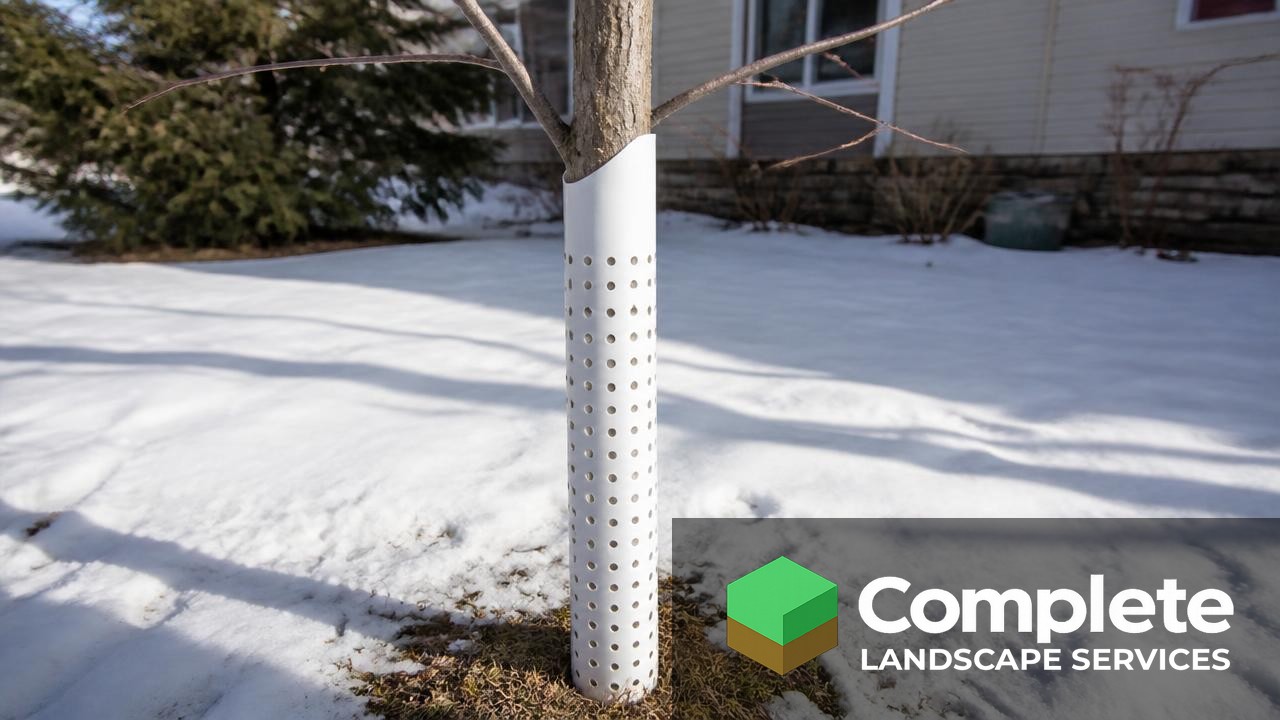
Wrap young, thin-barked trees with a light-coloured tree guard or spiral wrap from the base to the first branches, installed in late autumn and removed in spring. A hardware cloth cylinder set a few inches into the soil and extending above expected snow depth stops voles and rabbits.
Sunscald happens on the south and southwest sides of thin-barked trees such as young maples, lindens, and fruit trees. Winter sun warms the bark on a cold day, cells become active, and the temperature drop at sunset kills them, producing long vertical cracks.
Always remove wraps in spring. Wraps left on year round trap moisture, harbour insects, and eventually constrict the trunk as it grows.
Set rodent guards before the first snow and extend them higher than you think necessary, because rabbits feed from the top of the snowpack, which may be a foot or more above the ground by February.
When should you wrap shrubs in burlap?
Wrap when a shrub faces prevailing wind, reflected winter sun, road salt spray, or snow load from a roof. Burlap should be supported on stakes to form a windbreak rather than pressed against the foliage, and it should never be plastic, which cooks plants on sunny days.
Broadleaf evergreens, newly planted evergreens, and anything on the windward side of a building or driveway are the usual candidates. Hardy, established shrubs in sheltered positions rarely need wrapping at all.
For multi-stem evergreens such as arborvitae and juniper, tying the stems loosely together with soft twine prevents heavy wet snow from splaying them permanently open. Tie in autumn and release in spring.
Anti-desiccant sprays can help on broadleaf evergreens in exposed positions, but they need reapplication mid winter and are no substitute for autumn watering and a physical windbreak.
| Plant type | Main risk | Protection | Timing |
|---|---|---|---|
| Young deciduous trees | Sunscald, rodents | Trunk wrap plus hardware cloth | Late autumn, remove in spring |
| Evergreen shrubs | Desiccation, wind burn | Deep watering, burlap windbreak | Before ground freezes |
| Broadleaf evergreens | Leaf scorch | Watering, anti-desiccant, shade screen | Late autumn and midwinter |
| Perennials | Frost heave | 2 to 4 inches of mulch after dormancy | After several hard frosts |
| Roses | Crown dieback | Mound soil or mulch over the crown | After first hard freeze |
| Plants near driveways | Road salt | Burlap screen, spring soil leaching | Before first salt application |
How do you limit salt and snow damage?
Screen plants along driveways and walkways with burlap, switch to calcium magnesium acetate or sand in planted areas, avoid piling salted snow onto beds, and leach affected soil with deep watering in early spring. Salt damage often appears months later as one-sided browning facing the pavement.
Where snow is piled matters as much as what is spread on it. Directing plow piles to turf areas that can be repaired, rather than onto shrub beds, prevents both salt concentration and mechanical breakage.
Never knock ice off branches. Frozen wood is brittle and snaps easily, so let ice melt naturally and only brush off soft snow with an upward sweep.
For the rest of the end-of-season routine, our fall landscaping tips cover cleanup, cutbacks, and the order in which to close a yard down for winter.
Frequently Asked Questions
The bottom line
Winter protection is autumn work. Water deeply until the ground freezes, mulch once the soil has cooled, wrap trunks that are young and thin-barked, guard against rodents above expected snow depth, screen anything exposed to wind or road salt, and tie multi-stem evergreens against snow load. An afternoon spent on those steps in November prevents the replacement costs that show up in April, when the damage is already permanent.
Thinking bigger picture? Read our full guide on How to Start a Landscaping Company, or visit our member directory to connect with vetted Complete Landscape Services professionals.
Need professional help?
Browse our member directory to find trusted Complete Landscape Services professionals for tree & shrub care and more.
Our Member Directory