
How to Winterize a Sprinkler System Before the First Freeze
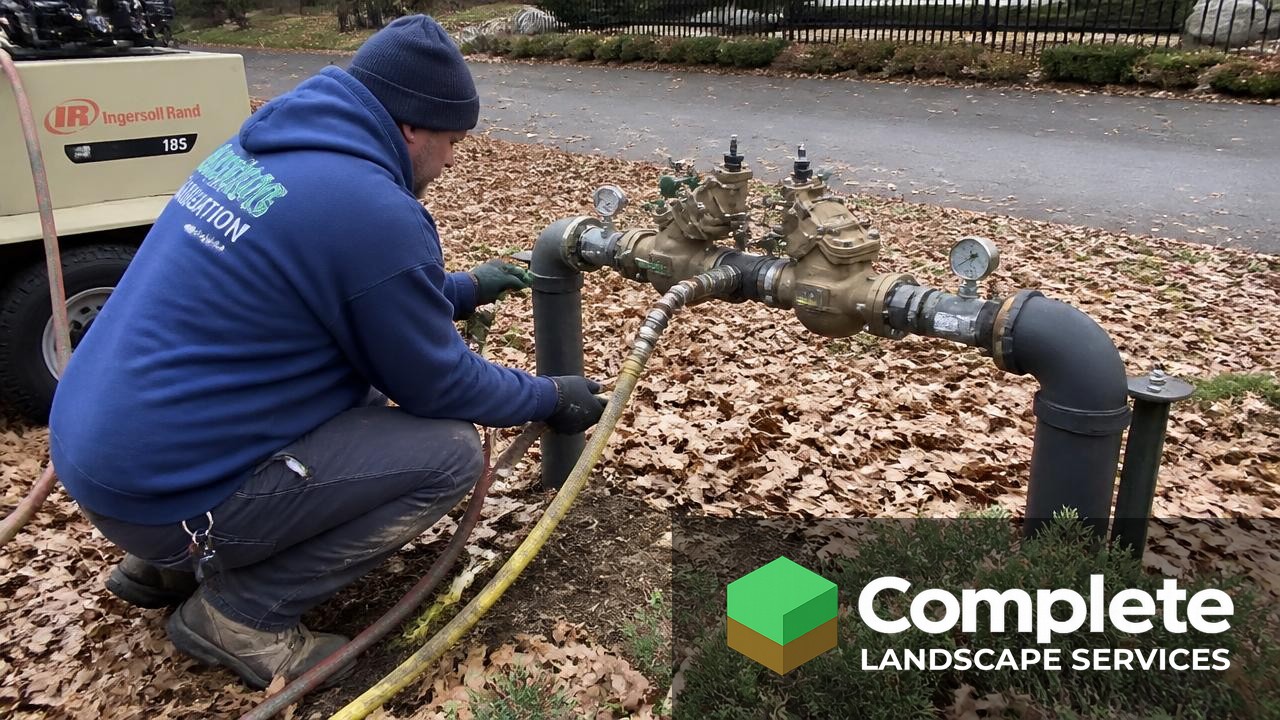
Table of Contents
Water expands about 9 percent when it freezes, and irrigation components are not built to absorb that. A single freeze on a charged system commonly cracks the backflow preventer, splits the manifold, and blows the seals out of a dozen heads at once, turning a 45-minute seasonal task into a spring repair bill of several hundred to a few thousand dollars. Winterizing is straightforward and the timing is forgiving as long as you do it before the ground starts freezing. This guide covers the full sequence for a typical residential system, the pressure limits that keep a blowout from doing its own damage, how manual and automatic drain systems differ, and when the job is worth handing to a professional.
When should you winterize a sprinkler system?
Winterize about two weeks before the average first hard freeze in your area, when overnight lows begin approaching the freezing mark. Across most of Canada and the northern USA that means late September through October, and in the transition zone late October through mid November.
Waiting for the first frost is cutting it too close. Frost on the grass is not the problem, a sustained freeze that reaches shallow pipe depth is, and an early cold snap arrives before the forecast promises one every few years.
There is no real penalty for winterizing early. Established lawns and plantings need almost no supplemental water once temperatures drop and growth stops, and anything newly planted can be hand-watered for the few remaining weeks.
Newly seeded areas are the one exception worth planning around. If you seeded in early fall, arrange hand watering or a hose-end sprinkler for the establishment period so you are not tempted to leave the system charged.
How do you shut down an irrigation system for winter?
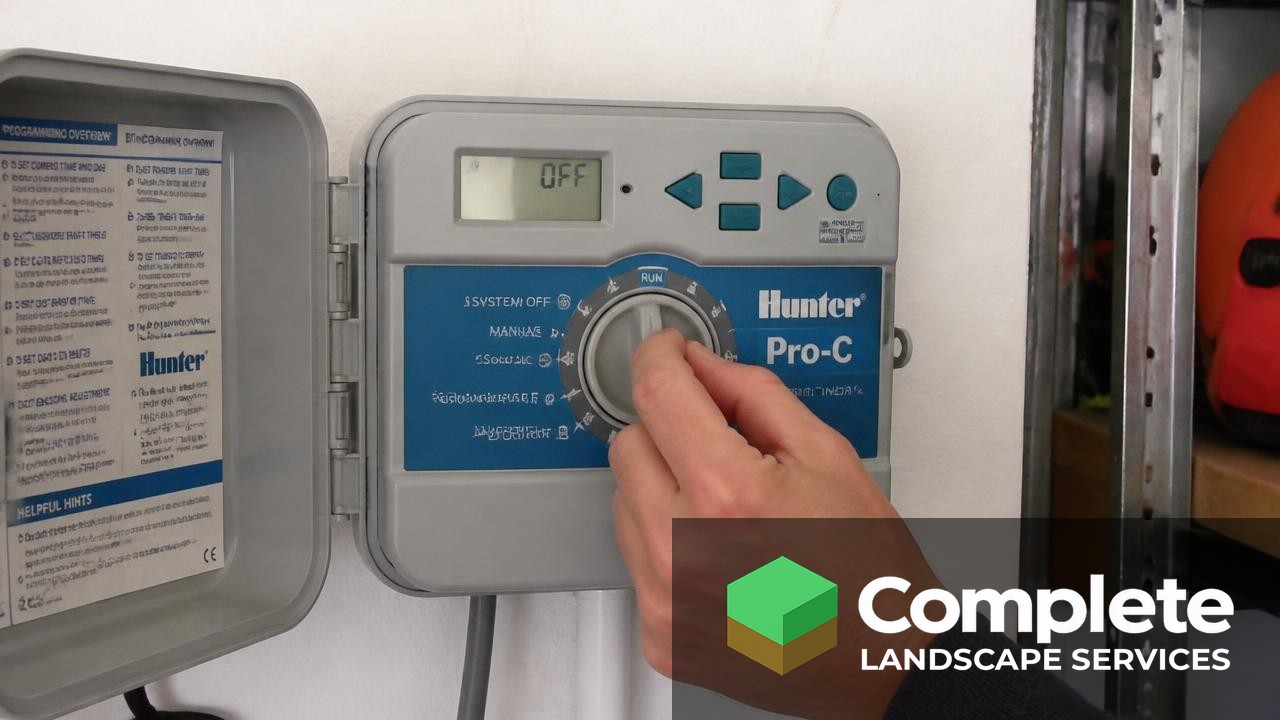
Close the main irrigation shutoff valve, set the controller to off or rain mode, then relieve pressure by opening a test cock or manual drain. Leaving the controller powered but set to off preserves your programming and keeps any internal clock battery from being the only thing holding your schedule.
Find the shutoff before you need it. On most homes it is an interior valve in the basement, crawlspace, or mechanical room on the line feeding the backflow assembly, and it should be a dedicated valve rather than the house main.
Set the controller to the off position rather than unplugging it. Some models lose programming when power is removed for months, and a few use standby power to maintain internal components.
If your system has a master valve or pump start relay, disable those too so nothing attempts to pressurize the line during a winter thaw.
How do you blow out sprinkler lines with compressed air?
Connect the compressor to the blowout port downstream of the backflow, open one zone at a time, and introduce air gradually at no more than 50 psi for rigid PVC or 80 psi for polyethylene pipe. Run each zone only until the heads spray mist rather than water, usually one to two minutes, then move to the next.
Volume matters more than pressure. A system needs roughly 10 to 25 cubic feet per minute to clear properly, which is well beyond a small pancake compressor, and this is the main reason the job is usually rented or contracted.
Never run air through a closed zone or with all zones closed, and never run a zone dry for several minutes. Air moving through an empty line heats the plastic gear drive in rotor heads and destroys them.
Cycle through every zone twice, working from the farthest from the compressor to the nearest. A second pass clears water that settles out of the pipe walls after the first.
| System type | Maximum pressure | Run time per zone | Notes |
|---|---|---|---|
| Rigid PVC piping | 50 psi | 60 to 120 seconds | Most common in warm and transition regions |
| Polyethylene piping | 80 psi | 60 to 120 seconds | Standard in cold climates, more flexible |
| Drip irrigation zones | 20 to 30 psi | 30 to 60 seconds | Remove end caps and flush first |
| Any system | Never exceed 80 psi | Two passes per zone | Wear eye protection at all times |
What about the backflow preventer?
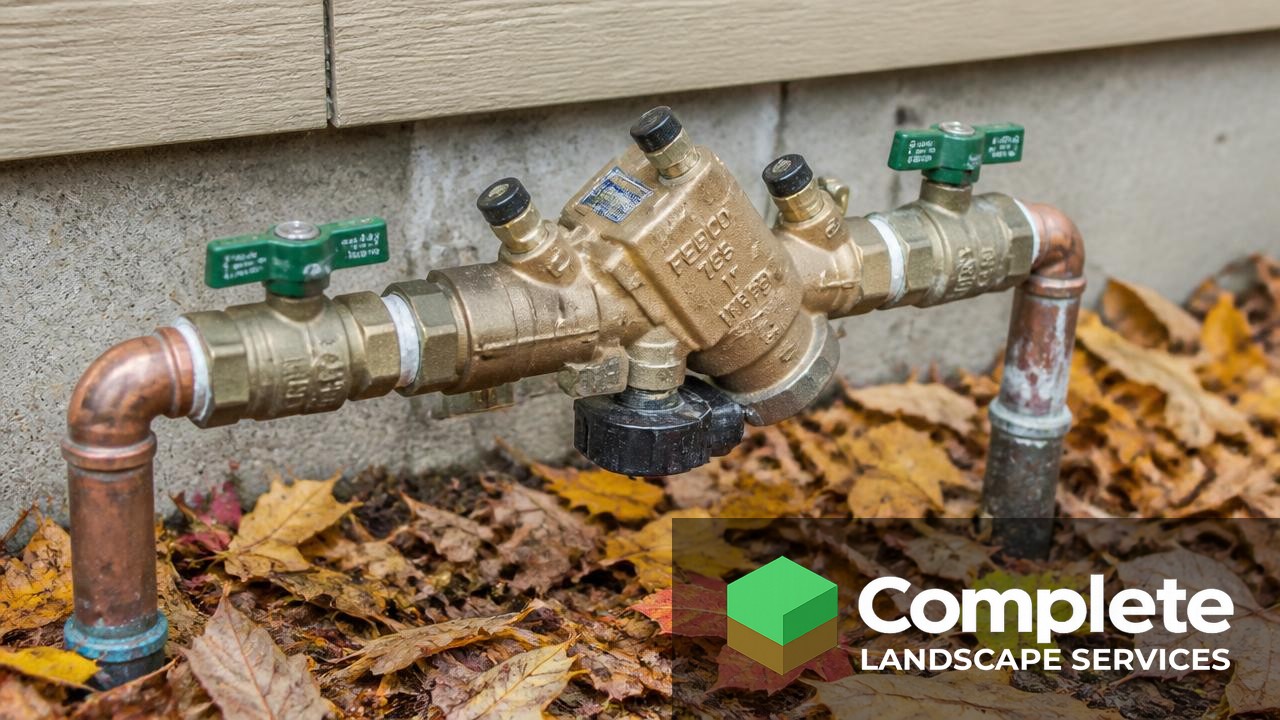
The backflow assembly is the most expensive and most freeze-vulnerable component above ground. After the blowout, open both test cocks to about 45 degrees, leave the ball valves half open so trapped water can escape, and insulate the assembly with an insulated cover or foam wrap and tape.
Half-open valves matter because a fully closed ball valve traps water inside the ball itself, and that trapped water is what cracks the body. Leaving valves at 45 degrees gives any remaining water somewhere to expand.
A replacement backflow assembly plus installation commonly runs $300 to $800, and in many municipalities it must be tested and certified after replacement, adding cost and scheduling delay.
In severe climates, some installers remove the backflow assembly entirely and store it indoors over winter. That is the safest approach where prolonged deep cold is normal.
Should you hire a professional to winterize?
Professional winterization typically costs $75 to $200 for a residential system and takes under an hour. Given that a single missed zone can cause repairs many times that amount, and that most homeowners do not own a compressor with adequate volume, contracting the work is usually the better economics.
If you do hire out, ask whether the price includes the backflow insulation and a spring startup visit, since many companies bundle the two and the spring visit is where system problems actually get found.
Keep a record of which zones exist and where the valve boxes are. Handing a technician an accurate zone map turns a search into a service call and often reduces the time billed.
Spring startup deserves the same care as shutdown. Repressurize slowly with the system open so the surge does not hammer the heads, then run each zone and check coverage before relying on the schedule. Our guide on drip irrigation versus sprinklers covers how each system type behaves at startup.
What else should be winterized outdoors?
Disconnect and drain hoses, shut off and drain exterior hose bibs, winterize water features and pumps, drain and store rain barrels, and blow out any drip lines feeding planters. Hoses left connected to a frost-free hydrant are one of the most common causes of burst interior pipe.
A connected hose holds water against the hydrant seat, which defeats the frost-free design and lets the freeze travel back inside the wall. Disconnecting takes ten seconds and prevents a genuinely expensive repair.
Pumps for ponds and fountains should be removed, cleaned, and stored in a frost-free space. Small submersible pumps in particular rarely survive a season sitting in ice.
Fold this into the broader end-of-season routine covered in our fall landscaping tips, which walks through cleanup, cutbacks, and the last mow of the year.
Frequently Asked Questions
The bottom line
Winterizing an irrigation system is an hour of work that protects the most fragile plumbing on a property. Shut the supply down before the first hard freeze, clear every zone with adequate air volume at a safe pressure, leave valves and test cocks partly open, insulate the backflow, and disconnect every hose on the building. Systems treated that way start up in spring with nothing worse than a clogged nozzle, while charged systems announce their neglect the first warm week of the year.
Thinking bigger picture? Read our full guide on How to Start a Landscaping Company, or visit our member directory to connect with vetted Complete Landscape Services professionals.
Need professional help?
Browse our member directory to find trusted Complete Landscape Services professionals for irrigation & drainage and more.
Our Member Directory