
How to Get Landscaping Customers: 9 Channels That Actually Work
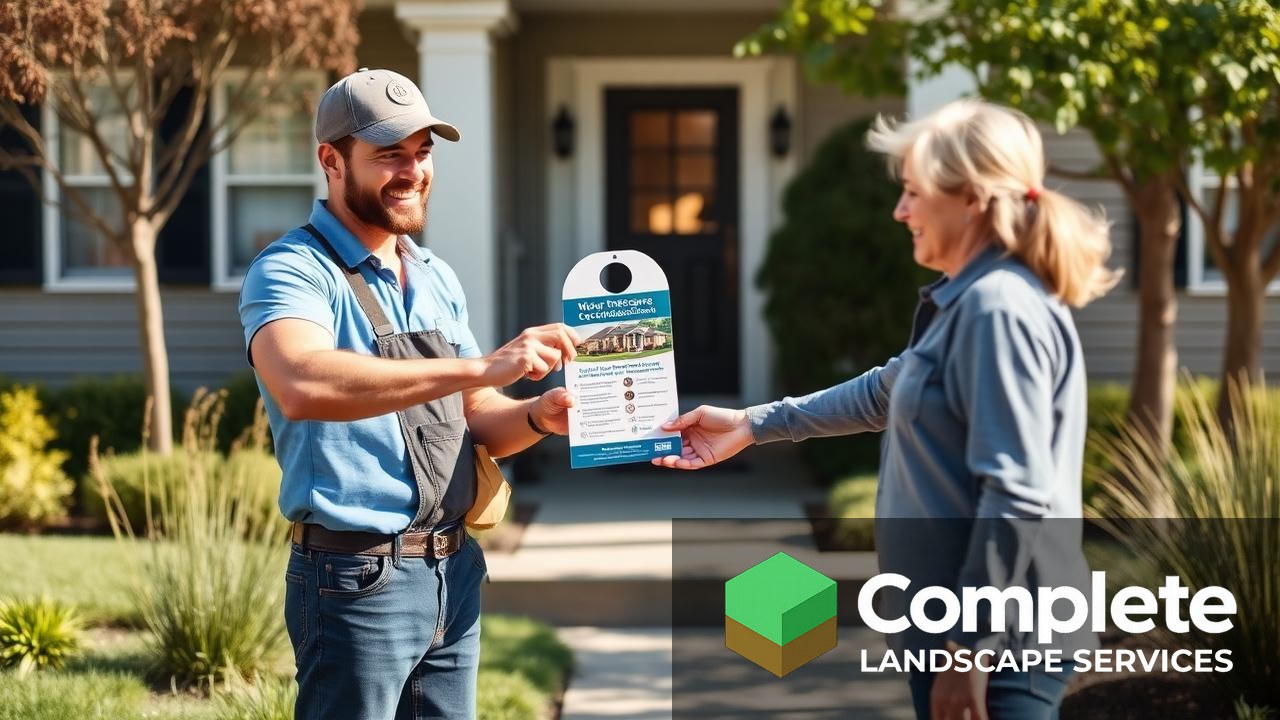
Table of Contents
Getting landscaping customers is a distribution problem, not a demand problem. Homeowners and property managers search for lawn and landscaping services constantly, and the operators who win are usually the ones who are easy to find, easy to verify, and easy to say yes to. The other half of the equation is geography. Twenty clients spread across a metro area is a worse business than twelve clients on three adjacent streets, because drive time is unbillable and it compounds every single visit. This guide covers nine acquisition channels ordered roughly by return on effort, with realistic expectations for how long each takes to produce results and how to keep the work profitable as it arrives.
What is the fastest way to get landscaping customers?
Claim and fully complete a Google Business Profile, then collect reviews aggressively. Local map results drive the majority of inbound landscaping enquiries, and profiles with recent photos, complete service lists, defined service areas, and a steady flow of reviews outrank sparse listings almost regardless of business age.
Complete every field. Services, service area, hours, attributes, and a description written for humans rather than keyword stuffing. Then add photos monthly, including before and after pairs from real jobs, because recency of activity is a visible ranking and conversion factor.
Ask for a review at the moment of highest satisfaction, which is usually right after the client walks out and sees a finished job for the first time. A short text with a direct review link converts far better than a card or a verbal request.
Respond to every review, positive and negative, within a couple of days. Prospective clients read the responses more carefully than the reviews, and a measured reply to a critical review often builds more trust than a wall of five-star ratings.
Do door hangers and flyers still work for landscaping?
Yes, when they are targeted rather than scattered. Distribute door hangers on the streets immediately surrounding a job you are already servicing, ideally on the day you are there. Typical response rates run 1 to 3 percent, which beats most paid channels on cost per acquired client.
Route density is the whole point. Canvassing the two blocks around an existing client means every new customer you sign adds almost no drive time, which raises the effective hourly rate of the entire route.
Put a specific, local, time-bounded offer on the piece. A first-visit discount for neighbours of a named street outperforms a generic service list every time, because it signals that you are already working nearby.
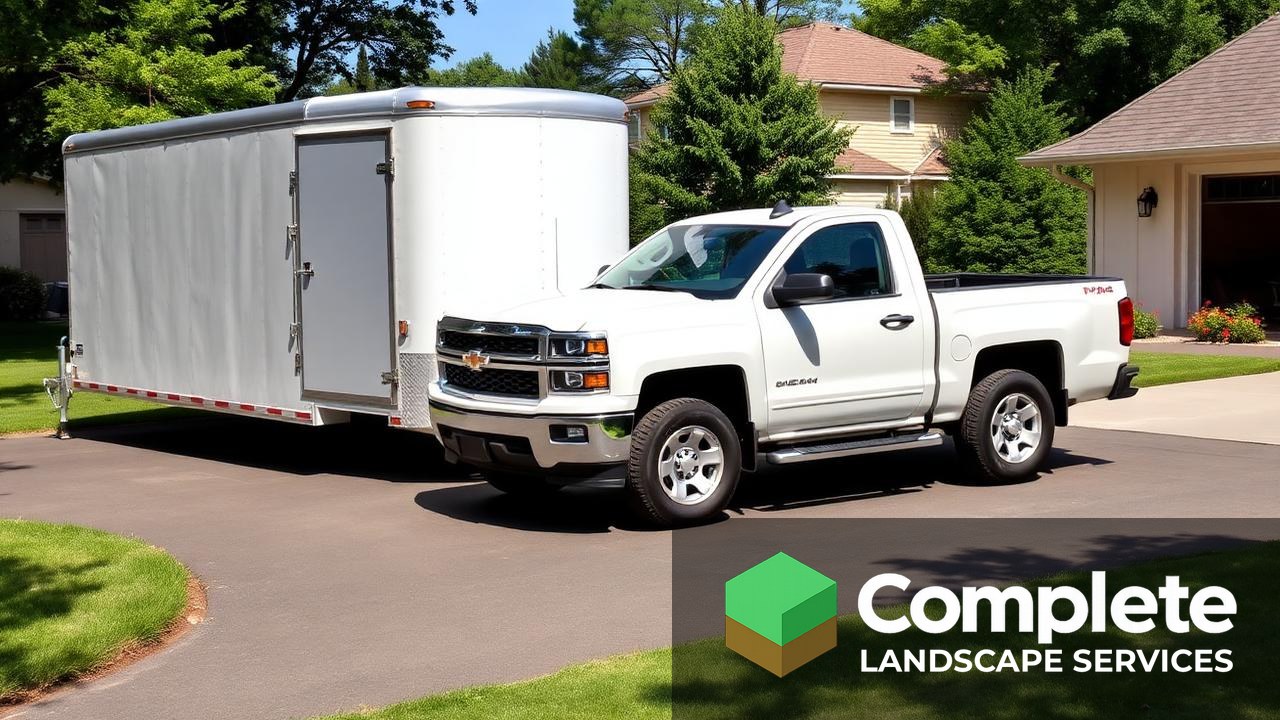
Time the drop. Leaving hangers while your truck and trailer are visibly parked on the street turns the flyer into social proof, and a freshly cut lawn two doors down is the most persuasive advertisement you own.
How do you build a referral program that works?
Offer an unambiguous two-sided incentive: a free or discounted service visit for the referring client and a first-visit discount for the new one. Ask directly, in person, at a moment when the client is visibly pleased, and follow up with a text containing something forwardable.
Vague requests produce nothing. Give clients the exact words and an easy artifact to pass along, such as a short text with your name, service area, and a link. Most people are happy to refer and unsure how to phrase it.
Track referrals by source and pay promptly. A referral bonus that arrives late or after a reminder will not produce a second referral from that client.
Referrals from a satisfied client cluster geographically, since people refer their neighbours and friends nearby. That makes referral your highest-quality channel on both conversion rate and route economics.
How do you win commercial landscaping clients?
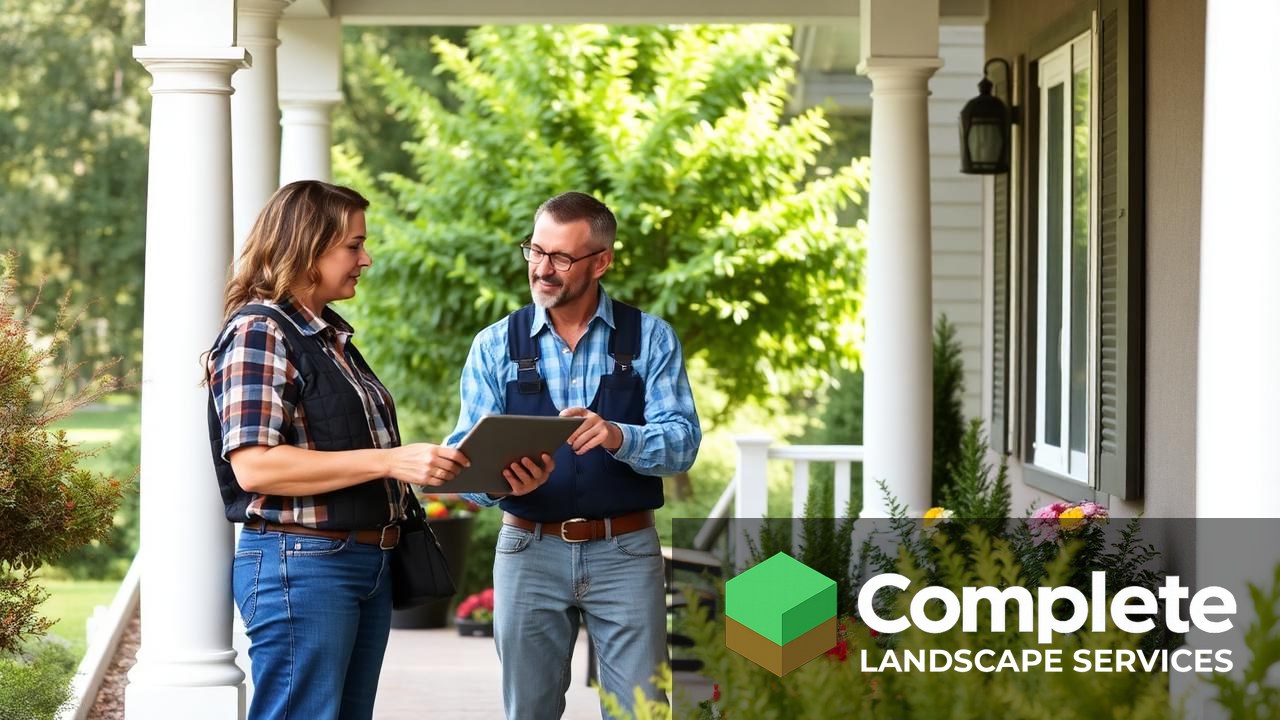
Commercial work comes from property managers, HOA boards, facility managers, and municipal bid lists rather than from search. Build the relationship before the contract is up for renewal, arrive with a certificate of insurance and references ready, and quote a clearly scoped annual agreement rather than a per-visit price.
Identify the decision maker. For an HOA it is usually a board member or the managing agent; for a retail plaza it is the property management firm, often headquartered elsewhere. A polished email to the right person beats twenty walk-ins at the wrong ones.
Get on municipal and institutional bid lists early, since they publish on fixed cycles and you cannot bid a contract you learned about after the deadline. Registration is usually free and takes an afternoon.
Understand what the buyer is actually buying, which is predictability. Property managers want a fixed monthly number, documented visit schedules, one point of contact, and no surprises. Our overview of what landscaping companies do is a useful frame for building a service menu that matches how commercial buyers think about scope.
Which other channels are worth the effort?
Lawn signs on active job sites, a simple website with service-area pages, local service directories, seasonal email or text campaigns to past clients, and partnerships with adjacent trades such as fence builders, deck contractors, and real estate agents all produce steady work at low cost.
Lawn signs are the highest return per dollar in the trade. A sign at the curb of a property you are visibly improving reaches exactly the audience most likely to convert, at a one-time cost of a few dollars per sign.
A modest website with a page per service area does real work in local search and gives your Google profile something authoritative to link to. It does not need to be elaborate; it needs to be fast, mobile-friendly, and specific about where you work.
Reactivation campaigns are underrated. A short seasonal message to past one-off clients ahead of spring cleanup or fall leaf season regularly outperforms any cold channel, because these people already know and trust your work.
| Channel | Time to first results | Relative cost | Best for |
|---|---|---|---|
| Google Business Profile and reviews | 2 to 8 weeks | Free | Steady inbound residential enquiries |
| Door hangers around existing jobs | Same week | Very low | Building route density fast |
| Lawn signs on job sites | Same week | Very low | Neighbourhood visibility |
| Referral program | 1 to 3 months | Low | High-quality, geographically clustered clients |
| Website with service-area pages | 3 to 6 months | Low to medium | Long-term organic search |
| Local directories and lead services | Immediate | Medium to high | Filling gaps in a new route |
| Commercial and HOA outreach | 3 to 12 months | Low, time-intensive | Predictable recurring revenue |
| Trade partnerships | 1 to 3 months | Free | Larger installation and hardscape projects |
| Past client reactivation | Days | Free | Seasonal revenue spikes |
How do you keep the customers you win?
Retention comes from consistency and communication rather than from discounts. Show up on the day you said, notify clients when weather forces a change, leave the property tidy, and invoice on a predictable schedule. Most landscaping churn is caused by silence, not by price.
A two-line text the evening before a scheduled visit, and another if rain pushes it, prevents the majority of client frustration. It costs nothing and it separates you from most of your local competition.
Do not let profitable clients become unprofitable through silent scope creep. When a client keeps adding small extras, price them, document them, and move them into the agreement rather than absorbing them.
Retention and pricing are linked. If a route is priced correctly you can afford the service level that keeps clients, and if it is not you will cut corners without meaning to. Our guide on how to price landscaping jobs covers the crew-hour math, and what to include in a landscaping contract shows how to lock scope and payment terms so the relationship stays clear.
Frequently Asked Questions
The bottom line
Get found, get reviewed, and get dense. A complete Google Business Profile with recent reviews handles inbound demand, door hangers and lawn signs around existing jobs build the tight routes that make the work profitable, and a simple two-sided referral offer compounds both. Commercial contracts take longer to land but stabilize revenue once they do, so start those conversations well before the current provider's agreement is up.
Thinking bigger picture? Read our full guide on How to Start a Landscaping Company, or visit our member directory to connect with vetted Complete Landscape Services professionals.
Need professional help?
Browse our member directory to find trusted Complete Landscape Services professionals for commercial landscaping and more.
Our Member Directory