The Complete Lawn Fertilizer Schedule: What to Apply and When

Table of Contents
Fertilizer is the most misused product in lawn care. Homeowners apply it at the wrong time of year, at the wrong rate, and usually far more often than the grass can use, then blame the product when the lawn burns, thins, or floods the neighbourhood storm drain with nitrogen. A lawn actually has a fairly simple nutritional calendar, driven by when the grass is putting energy into roots versus blades. Cool-season and warm-season grasses run those calendars at opposite ends of the year, which is why a schedule copied from the wrong region does more harm than no fertilizer at all. This guide lays out both schedules, explains the NPK numbers, and covers the application details that decide whether the nutrients reach the roots or run off into the street.
What do the numbers on a fertilizer bag mean?
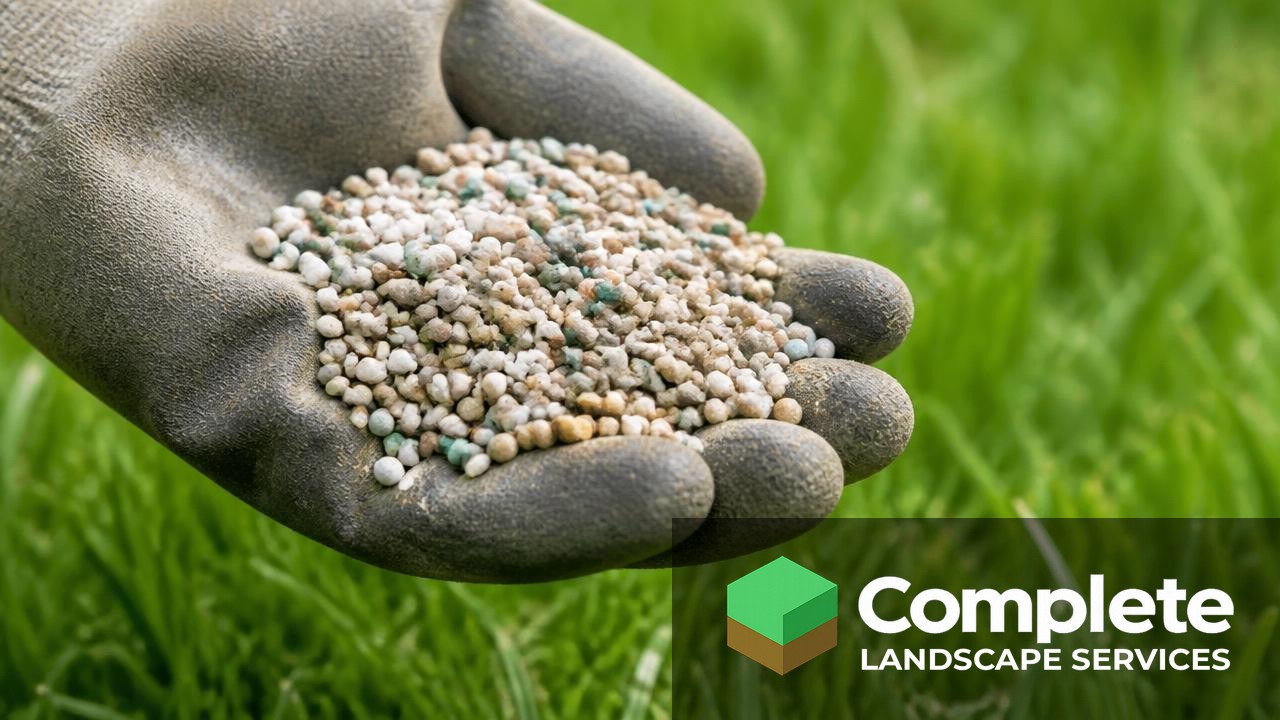
The three numbers are the percentage by weight of nitrogen, phosphorus, and potassium. A 24-0-8 bag is 24 percent nitrogen, no phosphorus, and 8 percent potassium. Nitrogen drives green leafy growth, phosphorus supports root establishment, and potassium builds stress and disease tolerance.
Most established lawns need mainly nitrogen and potassium. Phosphorus is only genuinely needed at establishment, when seeding or sodding, and many jurisdictions across the USA and Canada now restrict phosphorus on established turf because of its effect on waterways.
Rates are expressed in pounds of actual nitrogen per 1,000 square feet, not pounds of product. A typical single application is 0.75 to 1 pound of nitrogen per 1,000 square feet, so a 24 percent nitrogen product delivers that at roughly 4 pounds of product per 1,000 square feet.
Slow-release nitrogen, listed on the label as coated, sulfur-coated, or water-insoluble nitrogen, feeds over six to eight weeks instead of two. It costs more per bag, produces far less surge growth, and is much harder to burn a lawn with.
When should you fertilize a cool-season lawn?
Feed cool-season grass three to four times per year: a light feeding in mid to late spring, an optional light summer feeding, the heaviest application in early fall, and a late fall application about two weeks before the ground freezes. Early fall is the single most valuable feeding of the year.
Early fall works because the grass is actively building roots and tillers while cool air limits disease pressure. Nutrients applied then are stored and pay out as early green-up and density the following spring.
Skip or reduce summer feeding on Kentucky bluegrass and fescue. Pushing nitrogen into a heat-stressed lawn invites disease and forces the plant to grow leaves when it should be conserving resources.
Pair the fall feeding with core aeration where the soil is compacted so the product reaches the root zone rather than sitting on thatch. Our guide on when to aerate your lawn covers the right window by region.
| Timing | Cool-season lawns | Warm-season lawns |
|---|---|---|
| Early spring | Optional light feeding after first mow | None, grass still dormant |
| Late spring | 0.75 lb N per 1,000 sq ft | First feeding at full green-up, 1 lb N |
| Early summer | Skip or use slow-release only | 1 lb N per 1,000 sq ft |
| Late summer | Skip during heat stress | Final feeding, 0.75 to 1 lb N |
| Early fall | Heaviest feeding, 1 lb N | None |
| Late fall | Winterizer, 0.75 to 1 lb N | None, risk of winter injury |
When should you fertilize a warm-season lawn?
Fertilize bermuda, zoysia, St. Augustine, and centipede grass only while they are actively growing, from full spring green-up through late summer. Stop six to eight weeks before the first expected frost, because late nitrogen produces tender growth that is easily damaged by cold.
Warm-season grasses are heavier nitrogen users during their growing window, with bermuda often taking 3 to 5 pounds of nitrogen per 1,000 square feet across the season and centipede needing as little as 1 pound.
Centipede is the exception that catches people out. Over-fertilizing it causes decline rather than growth, so it should be treated as a low-input grass regardless of what a general-purpose product label suggests.
Potassium in late summer improves cold tolerance heading into dormancy, which is worth doing in transition-zone regions where winter injury is a real risk.

Should you get a soil test first?
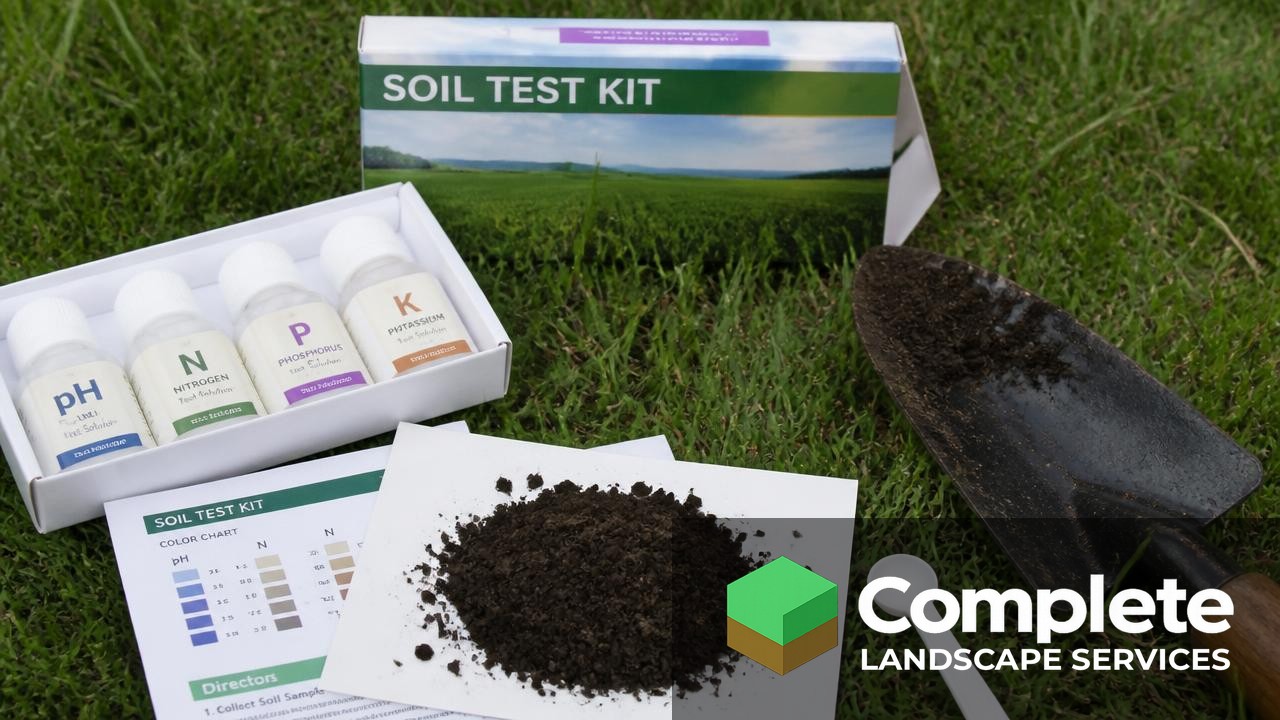
Yes. A $20 to $40 soil test reports pH, phosphorus, potassium, and organic matter, and it routinely changes the plan. Grass takes up nutrients efficiently only between pH 6.0 and 7.0, so a lawn at pH 5.2 will waste most of the fertilizer applied to it until the soil is limed.
Test once every three years, sampling from several spots across the lawn and mixing them. University extension labs across the USA and provincial equivalents in Canada provide the most reliable analysis and region-specific recommendations.
pH correction is slow. Lime takes six to twelve months to move pH meaningfully, which is why it should be applied in fall and reassessed the following year rather than expected to work within a season.
The test also prevents unnecessary phosphorus applications, which is both a cost saving and, in many regions, a legal requirement on established turf.
How do you apply fertilizer without burning the lawn?
Use a calibrated spreader, apply to dry grass, keep the rate at or below 1 pound of actual nitrogen per 1,000 square feet, and water the product in with about a quarter inch of irrigation. Most burns come from overlapping passes, spills, or applying quick-release nitrogen onto wet blades in heat.
Spread in two perpendicular passes at half the rate each rather than one heavy pass. This eliminates the striping that shows up two weeks later as dark and pale bands across the lawn.
Sweep granules off driveways, walkways, and the street back onto the lawn. Anything left on hard surfaces washes directly into storm drains, which is the main route by which lawn fertilizer reaches waterways.
Watering in matters. Our guide on how often you should water your lawn covers how to measure what your sprinklers actually deliver, which is also how you confirm that quarter inch after a feeding.
Is organic fertilizer better than synthetic?
Organic fertilizers release nutrients slowly through microbial activity, improve soil structure over time, and are nearly impossible to burn a lawn with. Synthetics act faster, cost less per pound of nitrogen, and give precise control. A common professional approach is synthetic in spring and organic in fall.
The trade-off is speed versus soil building. Organic products depend on soil temperature and biology, so they do very little in cold soil and a lot in warm soil, which makes their timing less predictable.
Compost topdressing is the most underrated organic input. A quarter inch of compost applied after aeration adds organic matter, feeds soil biology, and improves moisture holding, all of which reduce how much fertilizer the lawn needs in later years.
Whatever you choose, consistency beats intensity. A lawn on a modest, well-timed program outperforms one that alternates between heavy feeding and neglect.
Frequently Asked Questions
The bottom line
A lawn fertilizer schedule is less about products than about matching nutrients to the grass's growth cycle. Test the soil, learn whether your lawn is cool-season or warm-season, feed heaviest during the active root-building window for that type, keep single applications at or below one pound of nitrogen, and water the product in every time. Four well-timed feedings a year will outperform any amount of enthusiastic, badly timed spreading.
Thinking bigger picture? Read our full guide on How to Start a Landscaping Company, or visit our member directory to connect with vetted Complete Landscape Services professionals.
Need professional help?
Browse our member directory to find trusted Complete Landscape Services professionals for lawn care & maintenance and more.
Our Member Directory